

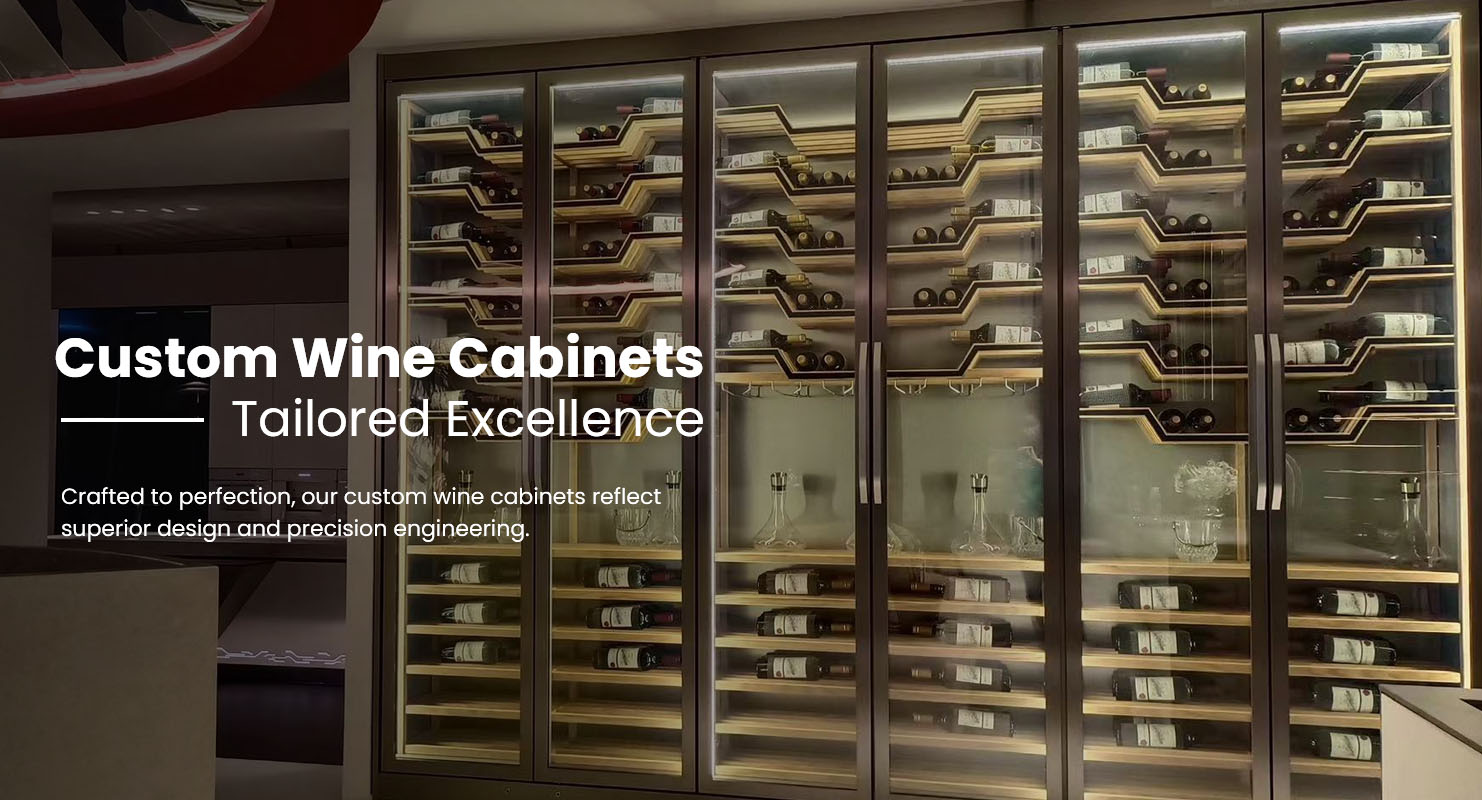
How Do Wine Cellar Cooling Units Work
wine cellar cooling units are designed to maintain a stable, cool environment that allows wine to age slowly and correctly. Unlike household air conditioners, these systems are engineered specifically for wine storage, where temperature stability, gentle airflow, and humidity balance are critical.
Below is a clear, technical explanation of how wine cellar cooling units work and why they are different from standard cooling systems.
The Core Purpose of a Wine Cellar Cooling Unit
A wine cellar cooling unit has one primary job:
Remove heat from the cellar at a controlled rate to maintain a stable temperature, typically between 12–16°C (54–61°F).
Everything in the system is designed to support slow, consistent cooling, not rapid temperature reduction.
Basic Working Principle
Wine cellar cooling units operate using a closed refrigeration cycle, similar in concept to refrigeration systems, but optimized for cellar conditions.
The process follows four key stages:
Heat absorption inside the cellar
Heat transfer through the refrigerant
Heat release outside the cellar
Controlled air circulation
Step 1: Heat Absorption Inside the Cellar
Inside the cellar, the cooling unit draws warm air across an evaporator coil.
The refrigerant inside the coil is cold
Heat from the cellar air transfers into the refrigerant
The air leaving the coil is cooler
This cooled air is gently circulated back into the cellar to avoid temperature stratification.
Step 2: Refrigerant Compression and Heat Transport
Once the refrigerant absorbs heat, it becomes a warm gas.
The compressor pressurizes the refrigerant
Compression raises the refrigerant temperature
The refrigerant is now ready to release heat elsewhere
This step allows heat to be physically moved out of the cellar.
Step 3: Heat Rejection Outside the Cellar
The heated refrigerant flows to the condenser, which is located outside the cellar.
Heat is released into a separate space or outdoor area
Fans assist heat dissipation
The refrigerant cools and condenses back into a liquid
This separation is essential. If heat is not expelled properly, the cellar cannot cool.
Step 4: Refrigerant Expansion and Cycle Reset
The refrigerant passes through an expansion device.
Pressure drops suddenly
Refrigerant cools rapidly
It returns to the evaporator to repeat the cycle
This continuous loop maintains a stable cellar temperature.
Why Wine Cellar Cooling Units Are Different From Standard AC
Wine cellar cooling units are purpose-built and behave differently from comfort cooling systems.
Key differences include:
Slower cooling cycles to avoid shock to the wine
Tighter temperature control with minimal fluctuation
Lower airflow velocity to reduce vibration and disturbance
Better humidity retention compared to household AC
Standard air conditioners cool too aggressively and dry the air excessively.
How Humidity Is Affected
Cooling naturally removes some moisture from the air, but wine cellar systems are designed to limit over-drying.
Properly sized units cycle less frequently
Insulated cellars reduce moisture loss
Many systems maintain humidity within 50–70% naturally
If humidity drops too low, supplemental humidification may be added.
Common Types of Wine Cellar Cooling Units
Through-the-Wall Units
Installed directly into a wall
Exhaust heat into an adjacent room
Suitable for small cellars
Ductless Split Systems
Evaporator inside the cellar
Condenser located remotely
Quieter operation and precise control
Ducted Systems
Cooling air delivered via insulated ducts
Equipment hidden from view
Used for larger or high-end cellars
All types use the same basic refrigeration principle.
How Temperature Control Is Maintained
Temperature sensors continuously monitor cellar conditions.
The unit turns on when temperature rises above the set point
It shuts off once the target temperature is reached
Gradual cycling prevents rapid swings
This controlled response is essential for long-term wine preservation.
Why Proper Sizing Matters
Cooling units must be matched to cellar size and heat load.
If undersized:
Temperature cannot be maintained
If oversized:
Short cycling occurs
Humidity drops
Equipment lifespan shortens
Correct sizing ensures stable performance.
Common Misunderstandings
Cooling units are just small air conditioners
More power always means better cooling
Passive cooling is enough for modern homes
Humidity control is separate from cooling
In reality, cooling, humidity, and insulation all work together as a system.
Conclusion
Wine cellar cooling units work by removing heat from the cellar and releasing it outside through a controlled refrigeration cycle. What makes them unique is not the basic technology, but how it is applied: slow cooling, stable temperature control, gentle airflow, and humidity awareness.
When properly sized and installed in a well-insulated space, a wine cellar cooling unit creates the stable environment wine needs to age gracefully and predictably over time.