

Does A Home Wine Cellar Have To Have A Cooler
Climate Control, Engineering Logic & Project Sourcing Insight
A home wine cellar does not always require an active cooling unit, but in most modern residential environments, a dedicated wine cooling system is strongly recommended. Whether a cooler is required depends on three primary factors:
Natural temperature stability of the space
Seasonal fluctuation range
Humidity consistency
Wine is sensitive to temperature swings more than absolute temperature. Even small repeated fluctuations can accelerate aging, dry corks, or cause leakage. For most homes, especially in mixed or warm climates, a controlled cooling solution ensures stability rather than relying on passive conditions.
WINTON is a professional Wine Cooler and wine cabinet manufacturer specializing in integrated insulation foaming, air-cooling circulation systems, and temperature-controlled cabinet engineering. The same environmental control principles applied in cabinet systems also apply when designing a home cellar space.
1. When You May Not Need a Cooler
A cooler may not be required if:
The cellar is naturally underground
Ambient temperature remains consistently cool year-round
Seasonal variation is minimal
Humidity remains balanced
The space is fully insulated and vapor-sealed
In rare cases where underground soil temperature remains stable throughout the year, passive storage can be viable. However, many residential environments do not maintain consistent conditions across all seasons.
2. Why Most Homes Require a Cooling Unit
In typical residential construction:
HVAC systems fluctuate daily
Seasonal changes shift room temperatures
Interior walls transfer heat
Basements may experience humidity swings
Without active control:
Wine may age prematurely
Corks may shrink in low humidity
Mold may develop in excessive humidity
Labels may deteriorate
Wine cooler systems engineered with precise temperature ranges (commonly spanning approximately 5°C–18°C in cabinet systems) provide stability that passive rooms often cannot maintain.
3. Passive Cellar vs Controlled Wine Cabinet
Passive Cellar
Relies on building mass and insulation
Sensitive to seasonal variation
Requires precise construction detailing
Higher environmental uncertainty
Controlled Wine Cabinet
Integrated compressor system
Air-circulation management
Insulation foaming for thermal stability
Sealed glass or solid door options
Designed humidity behavior
WINTON’s cabinet engineering incorporates integrated foaming insulation and controlled air-cooling systems, demonstrating how engineered enclosures achieve stable internal environments regardless of surrounding conditions.
4. Small Space vs Full Room Decision
If space is limited:
Built-in wine coolers are often more efficient than constructing a full cellar
Under-counter units reduce construction complexity
Front-venting models simplify integration into cabinetry
If designing a dedicated cellar room:
Proper insulation and vapor barriers are essential
A dedicated cooling system prevents compressor overwork
Door sealing integrity becomes critical
5. Manufacturer vs Trader: Why Source Matters
When sourcing wine cooling solutions for residential or project installation, supplier structure directly impacts long-term reliability.
Direct Manufacturer Advantages
Integrated sheet metal fabrication
Controlled insulation foaming process
Structured compressor installation
Temperature calibration testing
ISO-based quality management
Certification documentation support
WINTON highlights factory production capabilities including bending, welding, foaming, and testing equipment, supporting consistent cabinet build quality.
Trader Limitations
Limited visibility into insulation thickness
Inconsistent compressor sourcing
Reduced quality traceability
Variable batch consistency
For homeowners and project developers, working directly with a manufacturer improves performance predictability.
6. OEM / ODM Options for Home Projects
For custom residential developments or hospitality installations, OEM / ODM programs can include:
Custom Cabinet dimensions
Dual-zone configurations
Glass door specifications
Noise level control optimization
Integrated lighting solutions
Lock systems for security
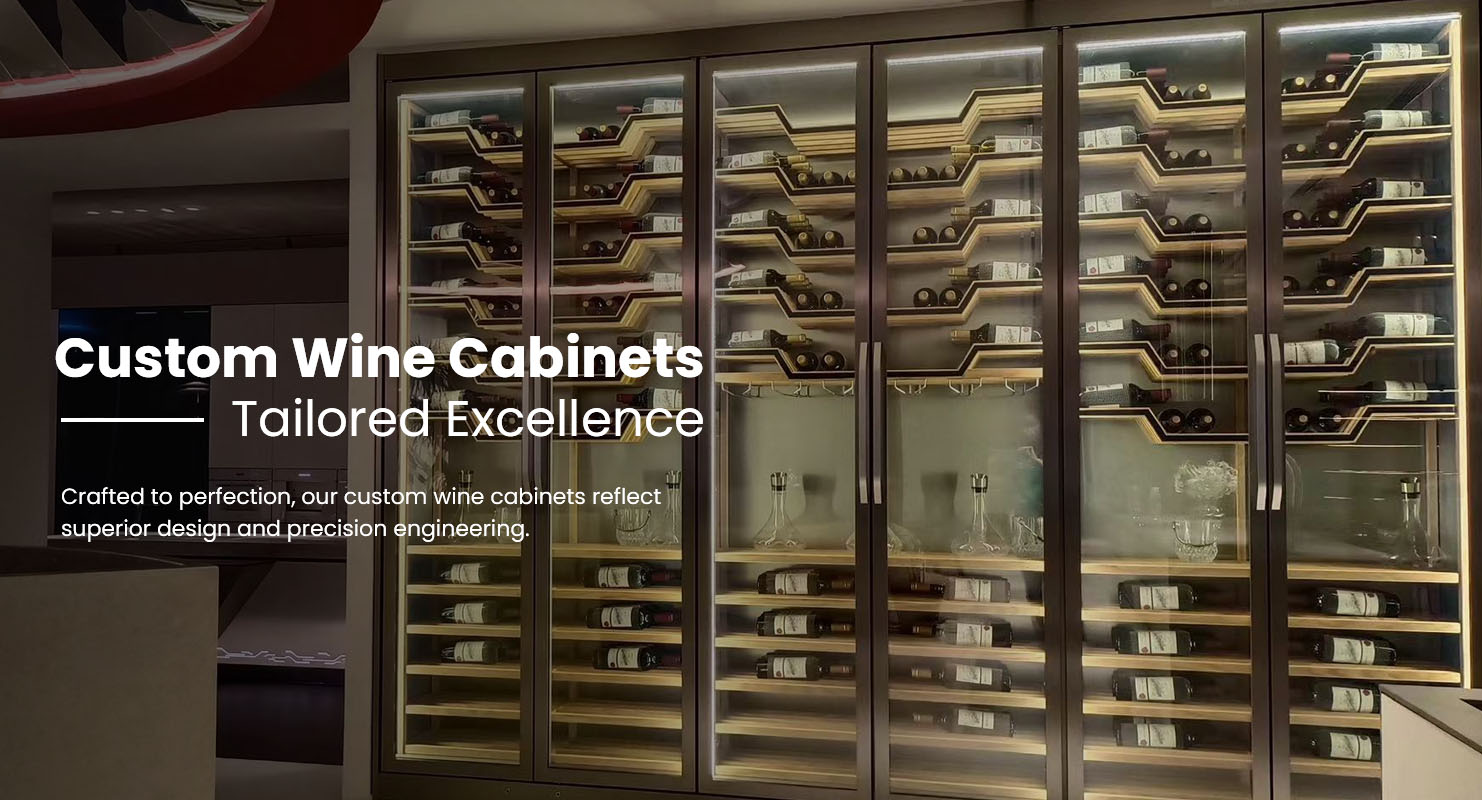
WINTON offers wine coolers and Custom Wine Cabinets suited for different installation constraints.
7. Bulk Supply & Project Sourcing Checklist
If specifying cooling units for multi-unit residential or hospitality projects, evaluate:
Voltage compatibility (110–120V / 220–240V)
Refrigerant compliance
Operating ambient temperature range
Noise level requirements
Door seal performance
Certification readiness (CE, CB, RoHS, ETL where applicable)
Proper specification alignment reduces installation risk.
8. Manufacturing Process Overview
Professional wine cabinet production typically includes:
Sheet metal fabrication
Structural bending and welding
Insulation foaming
Compressor installation
Evaporator and airflow integration
Electrical wiring
Temperature calibration testing
Final inspection
Integrated production control improves reliability and performance stability.
9. Quality Control Checkpoints
For wine cellar cooling systems, require:
Temperature stability testing
Door seal leakage verification
Noise testing
Compressor performance validation
Electrical safety inspection
Long-duration operational testing
Environmental control stability is the primary performance metric.
10. Export Market Compliance
Wine coolers distributed internationally must comply with:
Electrical safety standards
Environmental regulations such as RoHS
CE / CB certification where required
ETL or equivalent for specific markets
Regional energy efficiency regulations
WINTON indicates support for multiple international compliance frameworks, simplifying regulatory clearance for global deployment.
Final Insight
A home wine cellar does not always require a cooler if natural underground conditions are stable and well-insulated. However, in most residential environments, a dedicated cooling system provides essential temperature stability, protects wine quality, and reduces environmental risk.
From a sourcing perspective, selecting a structured manufacturer with integrated insulation technology, controlled production processes, validated temperature performance, and export compliance support ensures predictable performance and long-term reliability for residential wine storage solutions.