
How To Create A Wine Cellar in A Non-Traditional Space
Creating a wine cellar is no longer limited to basements or dedicated underground rooms. In modern residential and commercial projects, wine storage is increasingly integrated into spaces such as dining areas, closets, staircases, lounges, and bar walls. The key to building a functional wine cellar in a non-traditional space is not the room type itself, but the ability to maintain stable temperature, humidity, insulation, and airflow conditions.
Manufacturers specializing in wine storage systems play an important role in these projects. WINTON focuses on the research, development, and production of wine cabinets, custom wine cabinets, and Cigar Cabinets. With manufacturing facilities located in Shunde, Foshan, the company provides both standard Wine Coolers and customized wine storage systems suitable for residential, hospitality, and commercial environments.
Why Non-Traditional Spaces Can Work For Wine Storage
A non-traditional space can become a wine cellar if the storage environment is properly controlled. Areas such as built-in cabinets, unused corners, or wall niches can support wine storage when insulation and cooling systems are correctly designed. Instead of relying on architectural space alone, modern wine cellars depend on insulated cabinet structures and refrigeration systems that maintain consistent temperature conditions.
For example, wine cabinets using integrated foaming insulation and air circulation systems help maintain stable internal conditions even when installed in living areas or open spaces. This approach allows property developers, interior designers, and homeowners to create wine storage solutions without building a separate cellar room.
Manufacturer Vs Trader In Wine Cellar Projects
When sourcing wine cellar equipment, buyers should understand the difference between manufacturers and traders. A manufacturer controls the production process and can adjust cabinet structure, insulation, cooling systems, and dimensions according to project requirements. This flexibility becomes essential when a wine cellar must fit into irregular spaces such as under-stair installations or built-in wall cabinets.
WINTON operates as a production-oriented company with equipment including shearing machines, bending machines, grooving machines, foaming systems, welding equipment, and testing facilities. Direct manufacturing capability allows the company to support customized wine cabinet projects and provide consistent product quality.
OEM And ODM Options For Custom Wine Cellars
Non-traditional spaces often require customized wine storage systems. Standard cabinet sizes may not fully utilize available space, especially in architectural niches or integrated furniture designs. OEM and ODM services allow buyers to adapt cabinet dimensions, shelving structures, door styles, and cooling systems to match the installation environment.
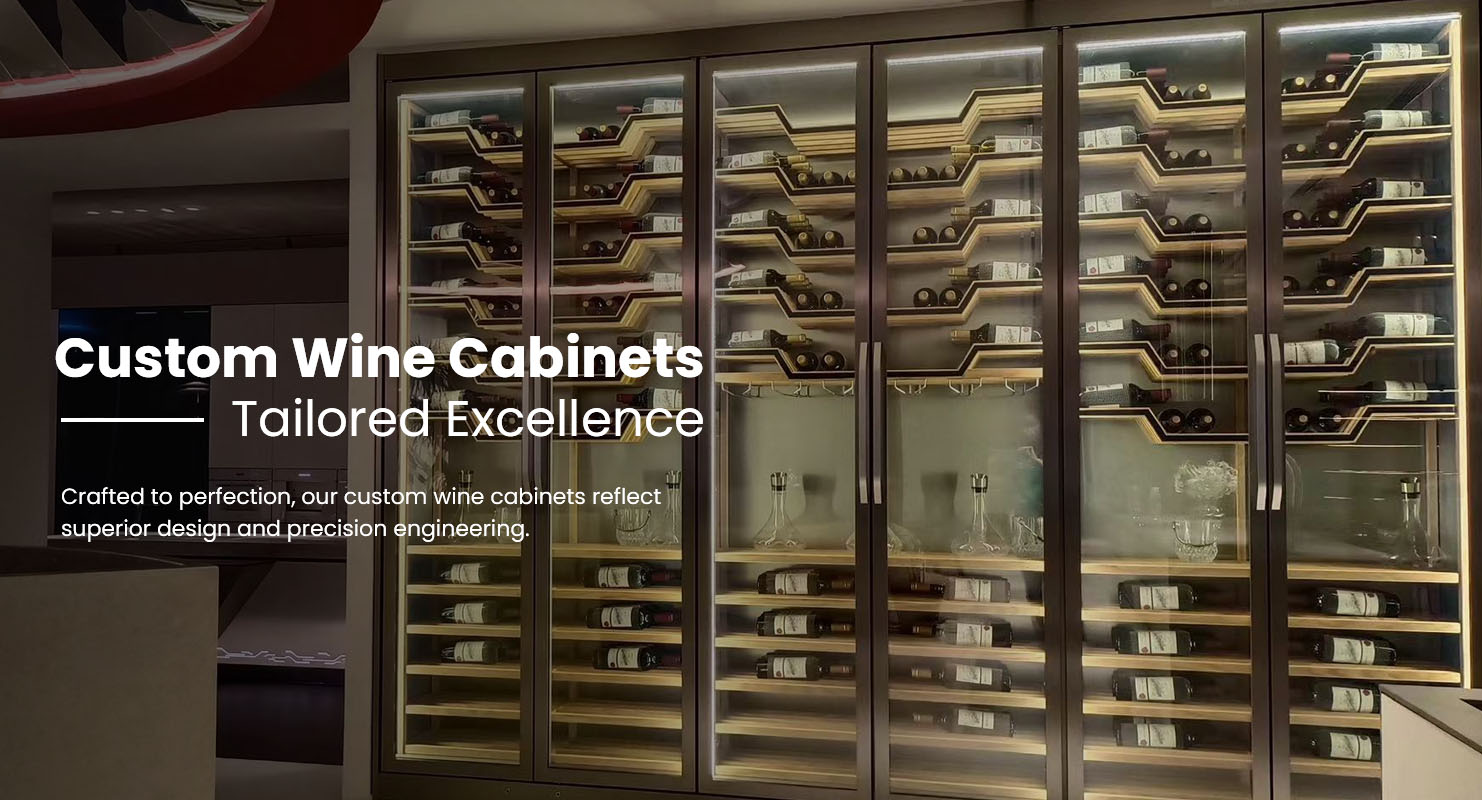
WINTON provides multiple Custom Cabinet solutions including built-in wine cabinets, closet wine cellar systems, walk-in wine cellar projects, and bespoke wine room installations. These solutions are designed to integrate wine storage with interior layouts while maintaining proper refrigeration performance.
Manufacturing Process Overview
A reliable wine cellar cabinet requires precise manufacturing processes. Production typically begins with sheet metal cutting and bending to create the cabinet frame. Grooving and shaping ensure accurate assembly and structural stability.
Insulation is applied through integrated foaming technology, which forms a sealed thermal layer inside the cabinet structure. This insulation reduces temperature fluctuations and improves cooling efficiency.
Cooling systems are then installed using compressor-based refrigeration with evaporator structures designed to maintain even temperature distribution. Air circulation systems help prevent hot spots inside the cabinet and support humidity balance for long-term wine storage.
Material Standards Used In Wine Cabinets
Material selection directly affects durability and storage performance. Premium wine cabinets commonly use stainless steel structures, insulated glass doors, and copper refrigeration components.
WINTON cabinets incorporate materials such as 304 stainless steel, double-layer glass doors, flame-resistant PVC components, and copper evaporator systems. These materials improve structural strength, thermal insulation, and refrigeration efficiency, which are important for long-term wine preservation.
Quality Control Checkpoints
Quality control is critical for wine storage equipment. Several inspection stages should be included in the production process.
First, cabinet dimensions and structural assembly must be verified to ensure proper installation compatibility. Second, insulation integrity and door sealing should be tested to prevent temperature loss. Third, refrigeration systems must be evaluated to confirm stable cooling performance. Finally, airflow and humidity conditions should be checked to ensure consistent storage environments.
Manufacturers with dedicated testing equipment can perform these evaluations before products leave the factory.
Bulk Supply Considerations
Bulk sourcing is common for hospitality projects, property developments, and commercial venues that require multiple wine cabinets. Buyers placing larger orders should evaluate production capacity, product consistency, and packaging protection for export transportation.
Working directly with a manufacturer simplifies bulk supply coordination because production standards, materials, and refrigeration systems remain consistent across multiple units.
Project Sourcing Checklist
Before purchasing wine cellar equipment, buyers should prepare key project information:
Installation space dimensions and layout
Expected bottle capacity
Installation type such as built-in or freestanding
Preferred door design and shelving configuration
Cooling system requirements
Material and finish expectations
Export packaging and delivery requirements
Providing this information helps manufacturers design suitable wine storage solutions.
Export Market Compliance
Wine cabinets used in international markets must meet electrical, material, and safety requirements in the destination country. Export-ready products should support appropriate voltage configurations, safe materials, and secure packaging for long-distance transportation.
WINTON supplies wine storage solutions to international customers and designs its cabinets with materials and structures suitable for global markets.
Conclusion
Building a wine cellar in a non-traditional space is entirely achievable when the project focuses on insulation, refrigeration stability, and proper cabinet design. Spaces such as closets, built-in furniture areas, or lounge walls can successfully store wine when supported by well-engineered wine cabinets.
For buyers sourcing wine storage systems, working with a manufacturer capable of customization, stable production processes, and reliable quality control can significantly improve project results. WINTON provides wine cabinets and custom wine cellar solutions designed for both residential and commercial installations, helping projects transform unconventional spaces into functional wine storage environments.