

Can You Use A Room Ac in A Wine Cellar
A room AC can cool the air, but it is usually not the right solution for a wine cellar. Wine storage works best when temperature stays steady rather than swinging with daily load changes. Purdue Extension notes that wine is traditionally stored at 10 to 16°C, and research on wine storage commonly places the ideal humidity near 70 percent. Standard comfort cooling often removes moisture aggressively, while wine storage needs balanced humidity as well as stable temperature.
Why Room Ac Falls Short
The main problem is control logic. A room AC is built for human comfort, quick pull-down, and sensible cooling. A wine cellar needs slower and more stable environmental management, especially for cork protection, label condition, and long-term storage consistency. DOE materials treat room air conditioners and wine-cellar-type systems as different product categories, which supports the practical sourcing view that they are engineered for different operating goals.
Key Storage Targets For Project Planning
| Item | Better Cellar Target | Why It Matters |
|---|---|---|
| Temperature | 10 to 16°C | Supports stable aging conditions |
| Preferred midpoint | Around 13°C | Widely used reference point |
| Relative humidity | About 60 to 70 percent | Helps reduce cork drying risk |
These targets matter more than raw cooling capacity alone. A project sourcing checklist should also cover insulation, door sealing, airflow path, condensate handling, and humidity behavior during door opening.
Why Buying From A Manufacturer Matters
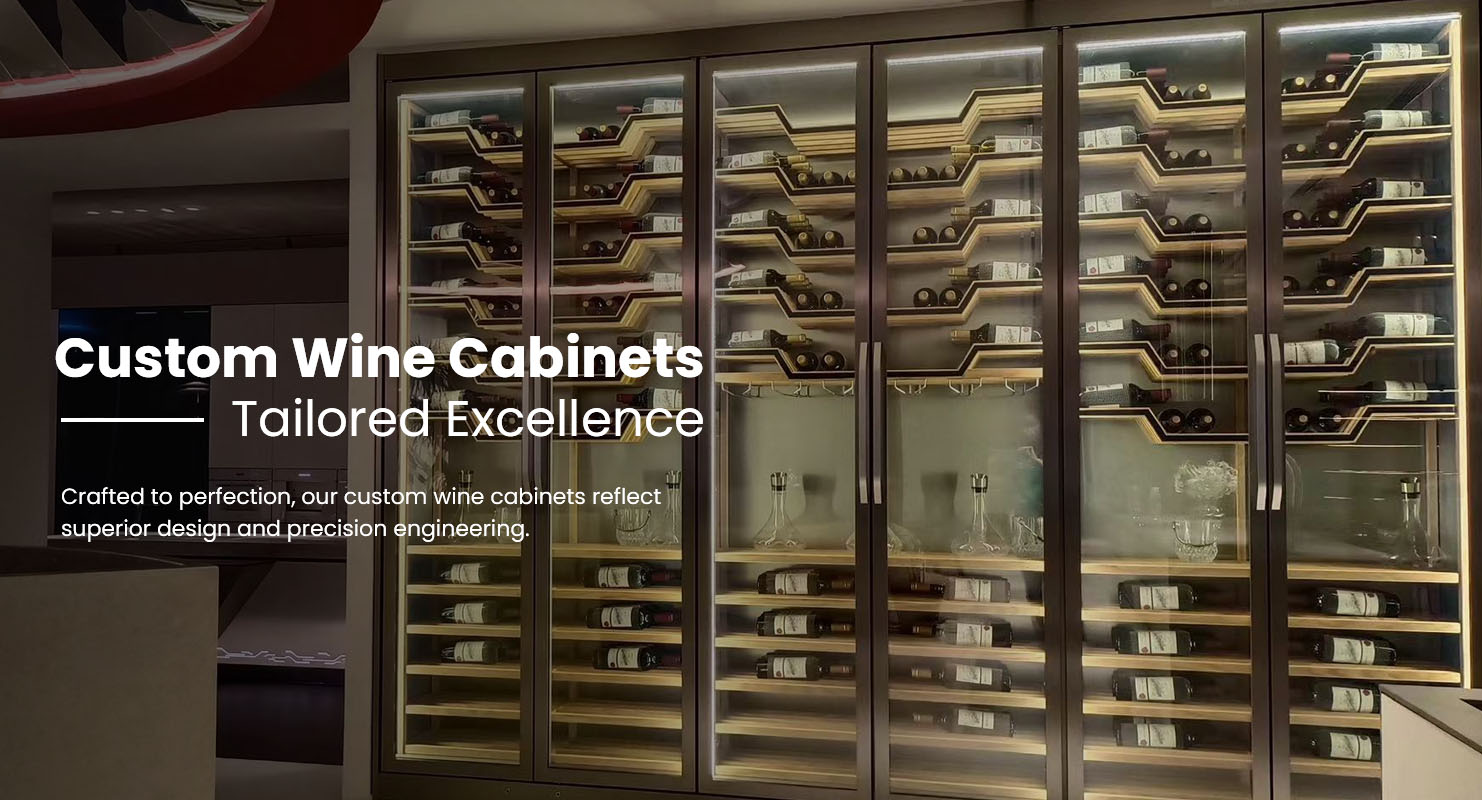
For wine cellar projects, manufacturer vs trader is not a small detail. Direct factory involvement improves drawing confirmation, ventilation matching, material selection, and production visibility. On Wenteng’s site, WINTON presents itself as a Wine Cooler and Custom Wine Cabinet manufacturer with shearing, bending, grooving, foaming, welding, and testing equipment, plus OEM and ODM support for standard and custom programs. That is important for bulk supply considerations because repeat orders need stable structure, insulation quality, and consistent assembly checkpoints.
OEM And ODM Process For Wine Cellar Programs
A practical OEM and ODM process usually starts with technical drawings, cooling layout review, material confirmation, sample validation, mass production, then final inspection and packaging. Wenteng’s published project guidance describes a timeline of about 1 to 2 weeks for drawing confirmation, 2 to 4 weeks for sample validation, 4 to 8 weeks for mass production, and 1 to 2 weeks for quality inspection and packaging. This kind of schedule transparency helps project buyers manage installation windows and bulk rollout plans.
Quality Control And Export Compliance
A reliable wine cellar program should include QC checkpoints for temperature stability, door seal integrity, noise, lighting, and humidity performance. Export market compliance should also be checked early. Wenteng references support across CE, CB, RoHS, and in some product lines ETL, ERP, and DOE related requirements, which is useful for cross-border distribution and project approval workflows.
Final Answer
Using a room AC in a wine cellar may look economical at first, but it usually creates risk in humidity control, temperature consistency, and project reliability. A dedicated wine storage solution from a manufacturer like Wenteng is the stronger route when the goal is OEM consistency, bulk supply stability, clear process control, and export-ready compliance documents.