

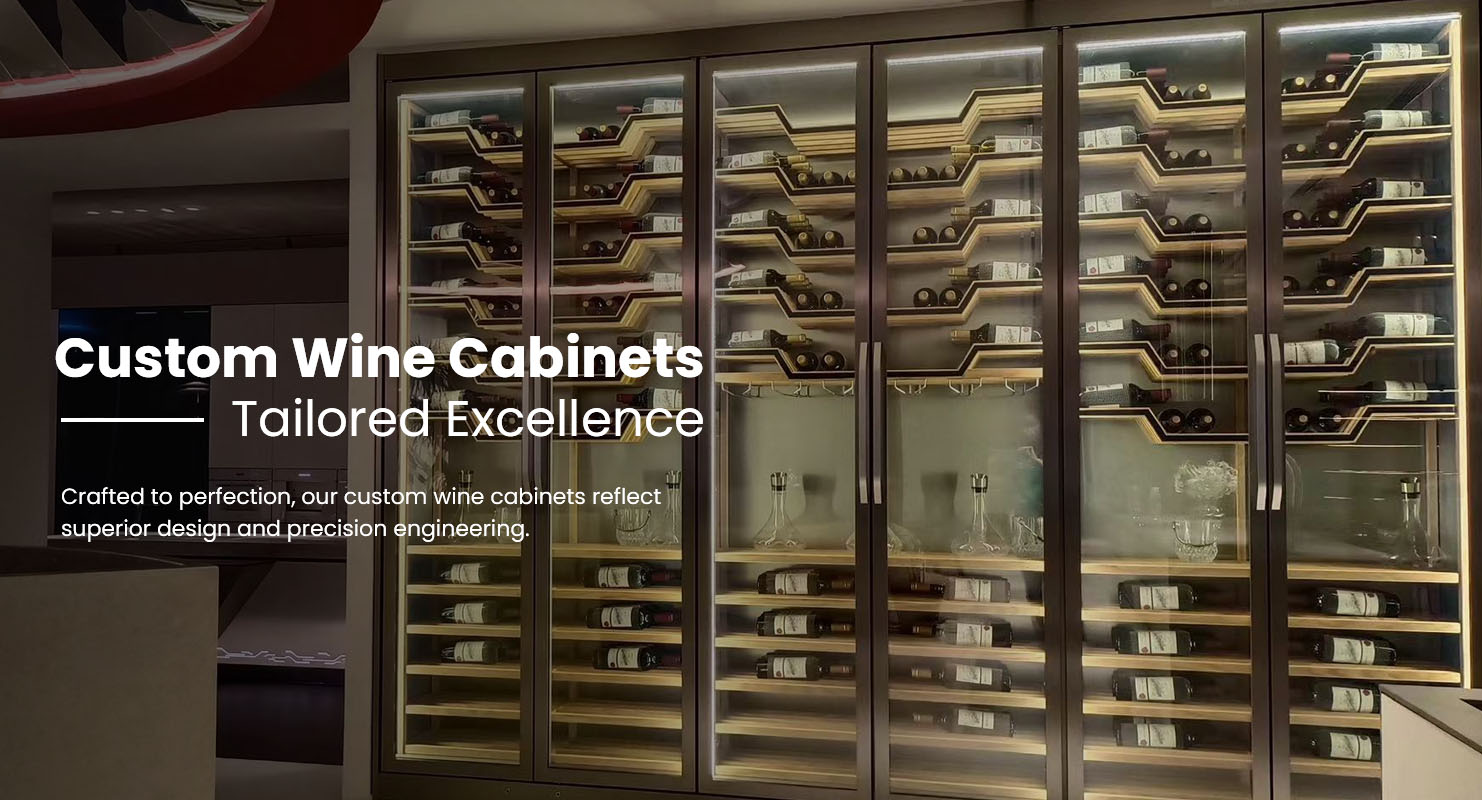
Do I Need A Humidifier in My Wine Cellar
Not always, but many wine cellars do need humidity control. A stable cellar is usually kept around 50 to 70 percent relative humidity, and many specialists treat about 60 percent as an ideal target. When humidity stays too low, corks can dry out and allow more oxygen exchange. When humidity stays too high, labels, packaging, and nearby materials may be affected by mold and condensation.
When A Humidifier Becomes Necessary
A humidifier is useful when the cellar environment is consistently dry because of air conditioning, seasonal heating, frequent door opening, or poor enclosure design. In many projects, the real question is not whether to add a humidifier alone, but whether the whole wine cellar cooling system and cabinet structure can keep both temperature and humidity stable. Wenteng highlights that humidity stability is influenced by equipment quality and installation conditions, not by one accessory alone.
Project Sourcing Checklist
Before choosing a humidity solution, buyers should confirm the full storage system.
| Item | Recommended Check |
|---|---|
| Humidity target | 50 to 70 percent RH |
| Preferred midpoint | About 60 percent RH |
| Temperature stability | Match cellar cooling design |
| Door seal | Reduce leakage and dry air entry |
| Insulation foaming | Support stable internal conditions |
| Compliance | CE, CB, RoHS, ETL where required |
This project sourcing checklist matters in bulk supply programs because humidity problems often come from weak sealing, unstable airflow, or inconsistent cabinet construction rather than from the absence of a humidifier alone.
Manufacturer Vs Trader
Manufacturer vs trader makes a practical difference in wine cellar projects. A trader may only match products, while a manufacturer can verify insulation thickness, airflow path, evaporator layout, electrical matching, and door structure before production starts. Wenteng presents itself as a Wine Cooler and Custom Wine Cabinet manufacturer with integrated foaming insulation, air circulation systems, and controlled humidity design concepts. That gives better visibility for OEM and ODM process control and more dependable batch consistency for repeated orders.
OEM And ODM Process With Wenteng
For custom programs, the OEM and ODM process should start with drawing review, capacity confirmation, material selection, and sample validation. After that come mass production, final inspection, and export packing. This is important for bulk supply considerations because project buyers often need matching dimensions, voltage options, noise targets, glass door specifications, and branding details across multiple units. Wenteng’s published workflow emphasizes technical confirmation before production, which helps reduce sourcing risk.
Manufacturing Process Overview And Quality Control
A stable wine cellar environment depends on disciplined manufacturing process overview and quality control checkpoints. Wenteng describes core stages including sheet metal fabrication, bending and welding, insulation foaming, compressor installation, evaporator and airflow integration, electrical wiring, safety testing, temperature calibration, and final inspection. These checkpoints matter because humidity performance depends on cabinet tightness, internal circulation, and overall system balance.
Material Standards And Export Compliance
Material standards used in a wine cellar system should support sealing, insulation, corrosion resistance, and long-term structural stability. For export market compliance, Wenteng references CE, CB, RoHS, and ETL readiness where required. That helps buyers handle different destination markets more smoothly and keeps Custom Wine Cellar cooling solution programs aligned with approval requirements.
Final Answer
A wine cellar does not always need a separate humidifier, but it does need reliable humidity control. If the room is naturally dry or the cabinet system cannot hold the right range, adding humidity support becomes necessary. Wenteng’s advantage is that it works as a manufacturer, not just a seller, with integrated production, OEM and ODM capability, quality control checkpoints, material consistency, and export compliance support. That makes humidity management far more reliable in long-term supply and project applications.