
How To Size A Wine Cellar
How To Size A wine cellar starts with bottle capacity, room usage, and cooling load. A wine cellar should not be sized only by available floor area. It needs enough space for bottles, shelves, airflow, access, service maintenance, and future collection growth. For hotels, villas, restaurants, clubs, and wine display rooms, correct sizing also affects daily operation and presentation value.
WSET wine education guidance recommends long-term wine storage at about 10°C to 15°C, because stable temperature helps protect wine quality during aging. Many professional cellar references also suggest keeping relative humidity around 50% to 70% to reduce cork drying risk while avoiding excessive moisture. These figures show why cellar size and cooling design must be calculated together.
Sizing Factor Professional Check Why It Matters
Bottle quantity Confirm 100, 300, 500 bottles or more Decides shelf length and cabinet layout
Bottle format Check 750ml, sparkling, and larger bottles Prevents shelf spacing problems
Room volume Measure width, depth, and ceiling height Helps match cooling capacity
Glass area Review door and display wall size Affects insulation and heat transfer
Access space Keep enough aisle and service room Supports daily use and maintenance
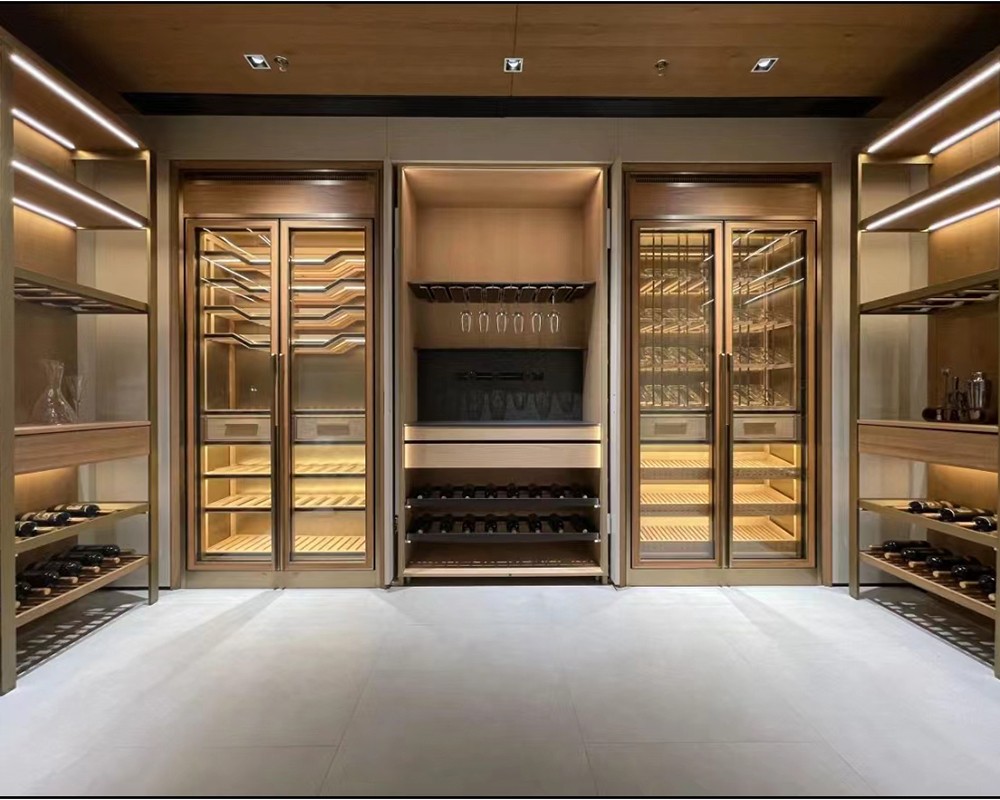
A compact wine cellar may start from 50 to 150 bottles. A medium project often needs 200 to 500 bottles. Larger commercial wine cellar spaces may require 800 bottles or more, especially when the cellar includes glass display walls, tasting areas, or walk-in access. We also suggest reserving 20% to 30% extra capacity for future stock growth, seasonal wine purchasing, and premium bottle display.
Winton supports Custom Wine Cellar and Wine Cooler cabinet projects based on real site conditions. Our team can review drawings, bottle plan, voltage, glass area, shelf structure, cooling position, and installation requirements before production. For compact projects, our 270L wine cooler cabinet can store about 101 standard bottles, with 5°C to 20°C temperature control, double-layer hollow tempered glass, wooden shelves, and stable cabinet cooling.
For larger wine storage system projects, we can support insulated glass doors, wooden shelves, stainless steel racks, lighting, cabinet structure, and cooling matching. Our factory experience in R&D, cabinet production, foaming insulation, welding, and temperature testing helps customers reduce design mistakes before installation.
A well-sized wine cellar should balance capacity, preservation, display, and future use. Send Winton your room size, target bottle quantity, and project style, and our team can help provide a practical custom wine cellar solution.
Previous: How To Size A Wine Cellar Cooling Unit