
How To Select Wine Cellar
Selecting a wine cellar requires more consideration than choosing a storage cabinet based only on appearance or capacity. A professional wine storage solution must create a stable environment where temperature, humidity, lighting, and vibration are carefully controlled.
From a manufacturer’s perspective, selecting the right wine cellar means matching storage requirements with the correct structure, cooling technology, materials, and application environment.
Wine storage studies show that most wines perform best when stored at a stable temperature between 10°C and 15°C with humidity maintained around 60% to 70%. Proper environmental control helps protect corks, reduce oxidation risks, and maintain wine quality during long-term aging.
Understand Your Wine Storage Requirements
The first step in selecting a wine cellar is understanding the purpose of storage.
Different applications require different solutions:
| Application | Recommended Solution |
|---|---|
| Home wine collection | Compact wine cabinet |
| Luxury residence | Custom wine cellar solution |
| Restaurant storage | Large capacity wine cabinet |
| Hotel project | commercial wine storage system |
| Wine display area | Glass door wine cabinet |
Storage capacity, installation location, and usage frequency all influence the final selection.
Choose The Right Wine Cellar Capacity
Capacity is one of the most important factors when selecting a wine cellar.
A suitable size depends on:
Current bottle collection
Future expansion plans
Available installation space
Bottle types
Display requirements
For example, smaller wine cabinets are suitable for apartments and private collections, while larger units are better for restaurants, hotels, and professional wine storage projects.
WENTENG provides different wine cabinet solutions, including compact Wine Coolers and large-capacity wine storage cabinets designed for various applications. (WENTENG)
For large collections, the 270L Smart Wine Cabinet offers large storage capacity with temperature control from 5°C to 20°C and can accommodate up to 101 standard wine bottles. (WENTENG)
Temperature And Humidity Control Performance
A quality wine cellar should provide stable environmental control.
Important features include:
Temperature Stability
Frequent temperature changes may accelerate wine aging. A reliable cooling system maintains consistent conditions.
Humidity Management
Humidity control protects natural corks and prevents excessive dryness or moisture.
Air Circulation
Balanced airflow helps maintain uniform temperature throughout the cabinet.
When selecting a wine cellar, temperature accuracy and humidity control should be considered as important as appearance.
Select Suitable Materials And Structure
The materials used in wine cellar manufacturing directly affect durability and insulation performance.
| Material | Function |
|---|---|
| Tempered glass | Improves insulation and visibility |
| Stainless steel | Provides durability and premium appearance |
| Wooden shelves | Protect bottles and improve organization |
| Insulation materials | Reduce temperature loss |
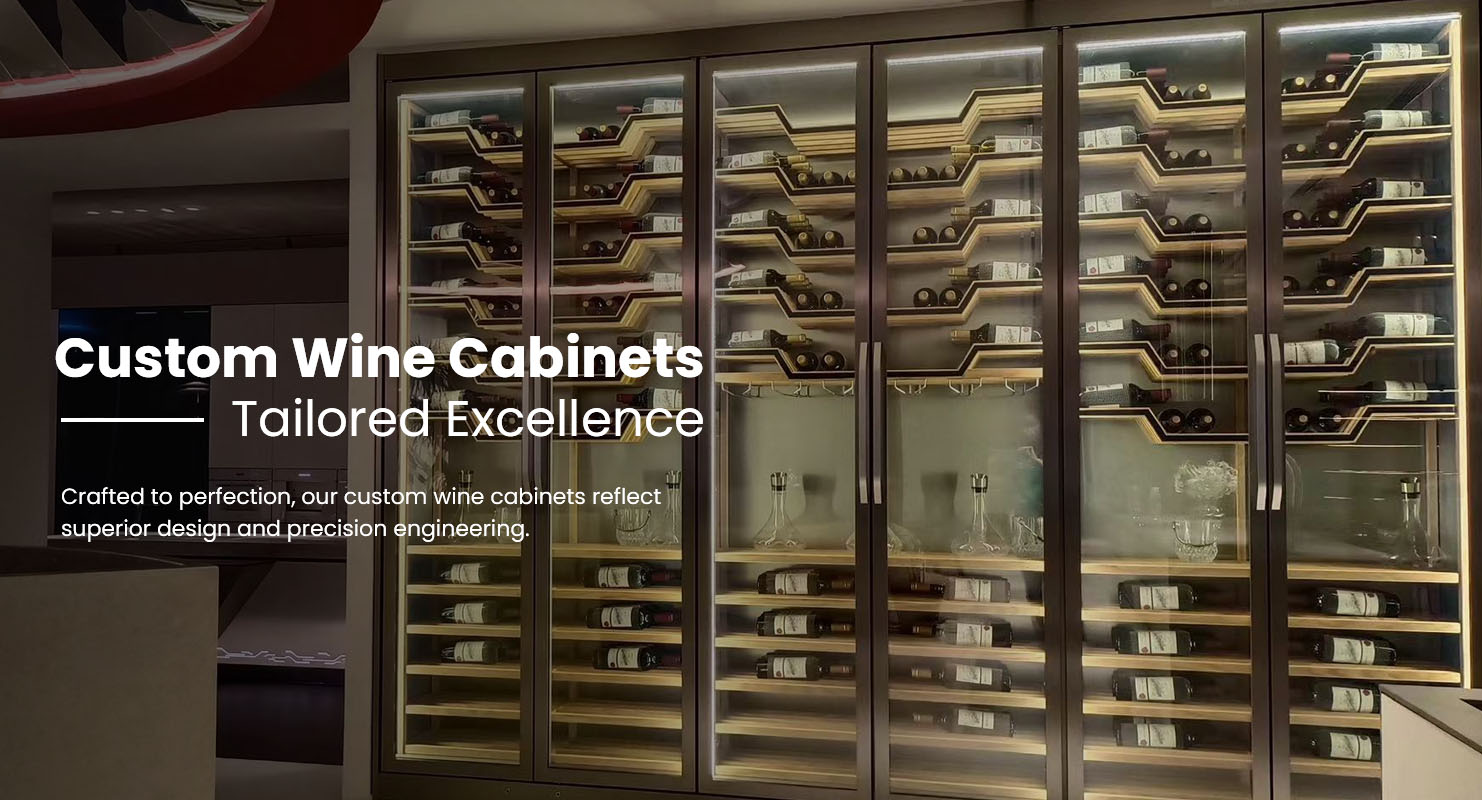
WENTENG wine cabinets use double-layer hollow tempered glass doors, stainless steel structures, and optimized cabinet designs to improve insulation and storage performance. (WENTENG)
Manufacturer Vs Trader When Selecting Wine Cellar Supplier
Choosing a direct manufacturer provides advantages in product development, quality control, and customization.
A professional wine cellar manufacturer can provide:
Direct production management
Customized designs
Technical support
Quality inspection control
Faster communication during projects
Compared with general trading companies, manufacturers have deeper control over production processes, materials, and product testing.
WENTENG focuses on research and development, production, and sales of high-end wine cabinets and Cigar Cabinets, providing integrated manufacturing capabilities for customized wine storage solutions. (WENTENG)
Manufacturing Process Overview Of Wine Cellars
Reliable wine cellar performance depends on professional manufacturing processes.
The production process includes:
Product design
Material preparation
Cabinet processing
Insulation foaming
Cooling system installation
Electrical assembly
Performance testing
Final inspection
Quality control checkpoints include:
| Production Stage | Inspection Purpose |
|---|---|
| Material inspection | Confirm material quality |
| Cabinet assembly | Ensure structural accuracy |
| Cooling testing | Verify temperature performance |
| Electrical testing | Ensure safety |
| Final inspection | Maintain product consistency |
WENTENG has production equipment including shearing, bending, grooving, foaming, welding, and testing equipment to support complete wine cabinet manufacturing. (WENTENG)
OEM And ODM Process For Custom Wine Cellars
Different projects may require customized dimensions, finishes, storage layouts, and functions.
A professional manufacturer can support:
Cabinet size customization
Interior shelf design
Exterior appearance development
Cooling solution selection
Project-specific production
The OEM and ODM process usually includes:
Requirement analysis
Product design
Engineering confirmation
Prototype testing
Mass production
This approach allows wine cellar solutions to better match residential, hospitality, and commercial requirements.
Project Sourcing Checklist For Wine Cellar Selection
Before choosing a wine cellar solution, important factors include:
| Evaluation Item | Purpose |
|---|---|
| Storage capacity | Match collection requirements |
| Cooling technology | Maintain stable conditions |
| Factory capability | Support production needs |
| Quality system | Reduce product risks |
| Certification support | Meet market requirements |
WENTENG develops wine storage solutions for international markets with a focus on technology, quality, and customized manufacturing. (WENTENG)
Export Market Compliance And Product Reliability
Wine cellars combine refrigeration systems, electrical components, and structural materials. Manufacturers need to consider:
Electrical safety requirements
Refrigeration performance
Material compliance
Product testing
Packaging standards
Professional quality management helps ensure reliable operation across different climates and markets.
Making The Right Wine Cellar Selection
The right wine cellar should balance storage capacity, temperature control, humidity management, materials, and manufacturing quality.
A professional wine cabinet manufacturer provides more than storage equipment. It provides a complete solution developed through engineering design, production control, and performance testing.
With integrated R&D, manufacturing capabilities, and customized wine storage experience, WENTENG provides reliable wine cellar solutions for residential, hospitality, and commercial applications worldwide.