

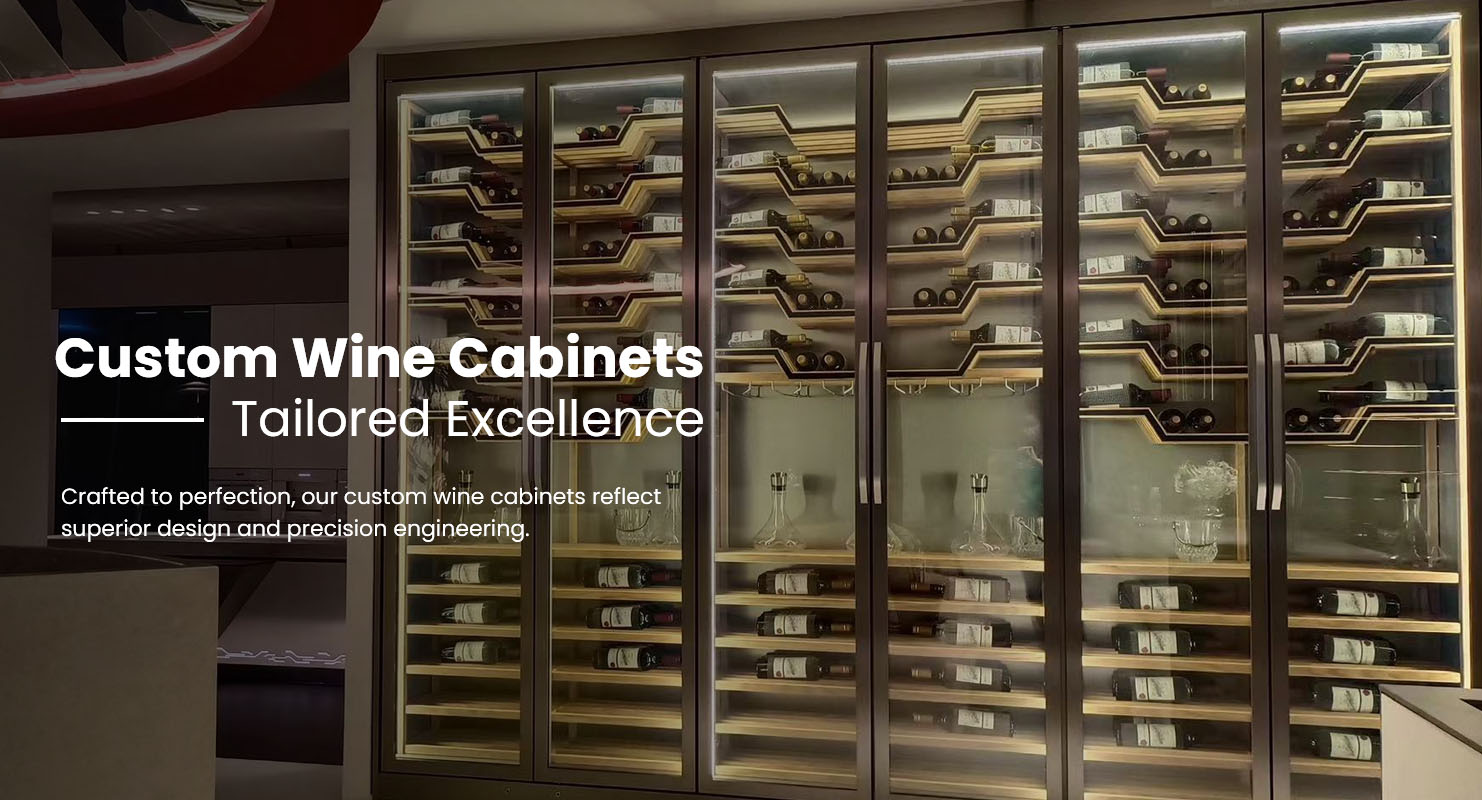
How To Convert A Closet Into A Wine Cellar?
A closet can be converted into a wine cellar by improving insulation, controlling temperature and humidity, and installing a suitable wine cooling system for stable wine storage.
What Makes A Closet Suitable For Wine Cellar Conversion?
A closet is often an ideal space for a small wine cellar because it already provides an enclosed area that can be modified for temperature-controlled storage. However, ordinary closets are not designed to protect wine from heat fluctuations, light exposure, or humidity changes.
A successful Closet Wine Cellar conversion requires more than adding wine racks. The space needs proper insulation, vapor barriers, airtight construction, and a dedicated wine cooling system to maintain the recommended storage environment.
From a Wine Cooler manufacturer’s perspective, many small wine cellar projects fail because homeowners focus on appearance but overlook temperature stability. Wine storage performance depends on creating a controlled micro-environment where temperature changes are minimized.
What Temperature And Humidity Should A Closet Wine Cellar Maintain?
A converted closet wine cellar should maintain a stable temperature between 10°C and 15°C, with around 12°C being widely considered suitable for long-term wine preservation.
Humidity control is also important. The ideal humidity range is usually between 50% and 70%. Excessively dry conditions may cause cork shrinkage, while excessive moisture can damage labels and encourage mold growth.
Key environmental requirements include:
| Storage Factor | Recommended Condition |
|---|---|
| Temperature | 10°C–15°C |
| Humidity | 50%–70% |
| Lighting | Low UV exposure |
| Airflow | Stable circulation |
| Temperature Change | Minimal fluctuation |
Maintaining stability is more important than achieving a specific temperature for a short period. A quality wine cooling system is designed to reduce temperature swings and provide continuous operation for long-term storage.
How Should A Closet Be Insulated Before Installing A Wine Cooler?
Proper insulation is the foundation of a closet wine cellar. Without insulation, the cooling system must work harder to maintain temperature, which can increase energy consumption and reduce cooling efficiency.
The main insulation steps include:
Seal Walls And Ceiling
Closet walls, ceilings, and floors should be sealed to reduce air leakage. Gaps around doors, corners, and electrical openings can allow warm air to enter and affect storage conditions.
Add Thermal Insulation Materials
Insulation materials help reduce heat transfer between the wine cellar and surrounding rooms. The insulation thickness depends on the building structure and climate conditions.
Install A Vapor Barrier
A vapor barrier helps prevent moisture migration into the cellar walls. This is especially important in humid regions where condensation problems may occur.
A well-prepared enclosure allows the wine cooler system to operate more efficiently and creates a more reliable storage environment.
What Type Of Wine Cooling System Is Needed For A Closet Wine Cellar?
The correct wine cooling system depends on closet size, insulation quality, ambient temperature, and bottle storage capacity.
For smaller closet conversions, compact wine cooling solutions are commonly selected because they provide stable temperature control without requiring large equipment space.
For larger wine cellar projects, a dedicated cellar cooling unit may be more suitable because it can handle higher heat loads and larger storage volumes.
Important selection factors include:
Cooling capacity based on room size
Operating temperature range
Noise level requirements
Energy efficiency
Installation method
Long-term reliability
Wine cooler manufacturers usually evaluate the complete storage environment rather than only the room dimensions. A poorly insulated closet may require a stronger cooling solution than a larger but professionally constructed wine room.
Can A Regular wine refrigerator Be Used For A Closet Wine Cellar?
A regular wine refrigerator and a closet wine cellar serve different purposes.
A wine refrigerator is designed as a standalone appliance that stores bottles inside its own insulated cabinet. A converted closet wine cellar creates a larger storage space where people can enter, organize racks, and store more bottles.
The difference can be compared as follows:
| Feature | Wine Refrigerator | Closet Wine Cellar |
|---|---|---|
| Storage Space | Limited bottle capacity | Larger customized capacity |
| Installation | Plug-and-use appliance | Requires construction preparation |
| Temperature Control | Built-in cabinet control | Room-level temperature control |
| Design Flexibility | Fixed size | Custom layout options |
| Application | Home wine storage | Premium residential or commercial storage |
For customers requiring more capacity and a customized wine display area, converting a closet into a wine cellar provides greater flexibility.
How Should Wine Racks Be Installed In A Converted Closet?
Wine racks should be selected according to bottle quantity, storage method, and available space.
Horizontal storage is generally recommended because keeping wine bottles on their side helps maintain contact between wine and cork. This reduces the risk of cork drying during long-term storage.
Common rack considerations include:
Maximum bottle capacity
Rack material durability
Air circulation space
Accessibility for different bottle sizes
Compatibility with cooling airflow
A professional layout should leave enough space around cooling equipment to ensure proper air circulation and stable operation.
What Are Common Mistakes When Converting A Closet Into A Wine Cellar?
Many closet wine cellar conversions experience problems because important technical details are ignored.
Common mistakes include:
Using Standard Room Air Conditioning
Household air conditioners are designed for comfort cooling rather than wine preservation. They often create temperature cycles that are too frequent for wine storage.
Ignoring Insulation Quality
Without proper insulation, cooled air escapes continuously, causing higher operating costs and unstable temperatures.
Installing Too Small A Cooling System
An undersized wine cooling system may run continuously without reaching the required temperature, especially in warm climates.
Adding Too Much Lighting
Strong lighting can increase heat inside the cellar and expose wine to unnecessary light. Low-heat LED lighting is usually preferred.
Why Is A Professional Wine Cooler Manufacturer Important For Closet Wine Cellar Projects?
A wine cooler manufacturer provides more than cooling equipment. Professional manufacturers consider cooling performance, product reliability, energy efficiency, and different installation environments.
For closet wine cellar applications, manufacturers typically evaluate:
Room volume and insulation condition
Expected bottle storage capacity
Local climate conditions
Installation requirements
Noise control needs
With experience in wine storage solutions, manufacturers can help develop suitable cooling systems for residential, hospitality, and commercial applications.
How Much Does It Cost To Convert A Closet Into A Wine Cellar?
The cost depends on several factors, including closet size, insulation requirements, wine racks, cooling equipment, and interior finishing.
Typical cost factors include:
Insulation and vapor barrier installation
Wine cooling system selection
Custom racks and storage accessories
Door and sealing upgrades
Interior decoration materials
A simple small wine closet conversion may require fewer modifications, while a premium wine cellar project with customized storage and professional cooling can require a larger investment.
What Is The Best Way To Start A Closet Wine Cellar Conversion?
A successful closet wine cellar project starts with evaluating the space conditions before selecting equipment.
The recommended process is:
Measure closet dimensions and storage requirements.
Check insulation and humidity conditions.
Select an appropriate wine cooling system.
Design wine rack layout and airflow paths.
Install and test temperature stability.
A well-designed closet wine cellar combines proper construction, reliable cooling technology, and practical storage planning to create a stable environment for wine preservation.
FAQ
Can Any Closet Be Converted Into A Wine Cellar?
Most closets can be converted if the space can be properly insulated and equipped with suitable temperature control.
Does A Closet Wine Cellar Need A Cooling System?
For long-term wine storage, a dedicated wine cooling system is recommended because normal room conditions cannot maintain stable temperature and humidity.
How Many Wine Bottles Can A Closet Wine Cellar Hold?
Capacity depends on closet size, rack design, and storage layout. Small closets may hold dozens of bottles, while customized spaces can store hundreds.
Is A Small Wine Cooler Enough For A Closet Conversion?
A small wine cooler may work for limited bottle storage, but larger closet wine cellars usually require a dedicated cooling solution designed for room-level temperature control.