

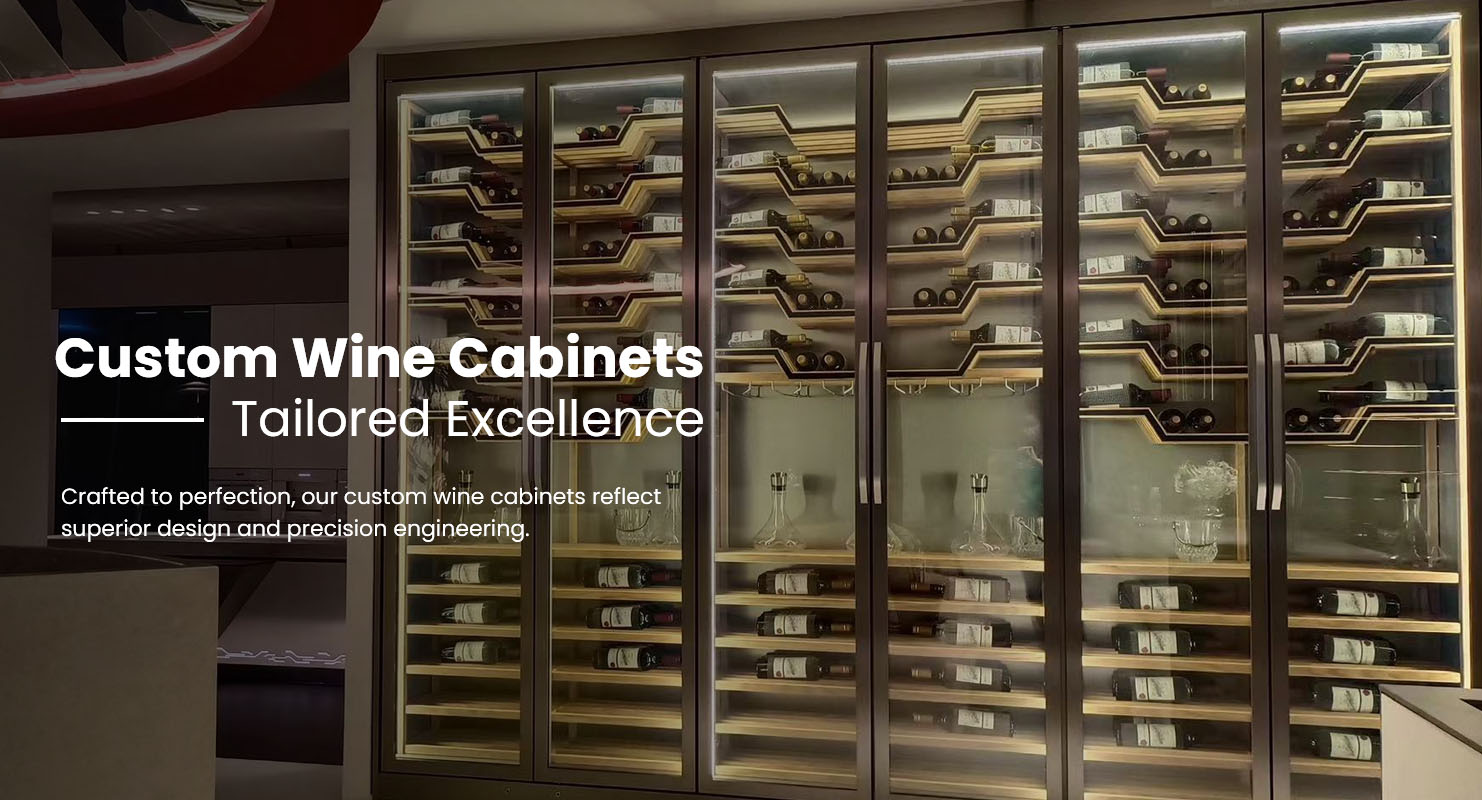
How To Expand Home Wine Cellar?
A home wine cellar can be expanded by increasing storage capacity, optimizing space layout, upgrading cooling systems, and redesigning the storage environment.
Why Do Home wine cellars Need Expansion?
Many wine collections grow over time, and an original Wine Cellar Design may eventually become insufficient. Expanding a home wine cellar allows additional bottle storage while maintaining proper temperature, humidity, and organization.
A wine cellar expansion is not simply about adding more shelves. The enlarged space must continue providing a stable environment for wine preservation.
From a Wine Cooler manufacturer’s perspective, expansion projects should consider both storage capacity and cooling performance. Increasing the room size without evaluating the existing cooling system may create temperature instability.
How Can A Home Wine Cellar Be Expanded?
The expansion method depends on available space, current design, and storage requirements.
Common expansion approaches include:
| Expansion Method | Suitable Application |
|---|---|
| Add More Wine Racks | Existing cellar with unused space |
| Convert Adjacent Room | Larger storage requirements |
| Extend Cellar Area | Major collection growth |
| Upgrade Storage Layout | Improve capacity efficiency |
| Add Secondary Storage Zone | Separate wine categories |
A successful expansion should improve capacity without reducing accessibility or environmental stability.
How Should Existing Space Be Optimized Before Expanding?
Before increasing the physical size of a wine cellar, optimizing the existing layout may provide additional capacity.
Effective improvements include:
Use Vertical Storage Space
Floor-to-ceiling wine racks maximize available wall space and increase bottle capacity without expanding the room.
Improve Rack Configuration
Replacing inefficient rack designs with modular storage systems can create more usable space.
Remove Unused Areas
Poorly planned display areas or oversized walkways may reduce practical storage capacity.
Organize Bottles Efficiently
Grouping bottles by type, region, or aging stage improves space utilization and management.
A professional layout review can often increase storage capacity before major construction changes are required.
Can A Home Wine Cellar Be Expanded Into Another Room?
Yes. Many home wine cellars are expanded by connecting adjacent rooms or converting nearby spaces.
Before expansion, several factors should be evaluated:
Wall structure
Insulation requirements
Cooling capacity
Door placement
Airflow design
Moisture protection
The new area should be integrated into the existing controlled environment rather than treated as a separate normal room.
Does A Larger Wine Cellar Need A Bigger Cooling System?
Usually, yes. Expanding the wine cellar increases the heat load that the cooling system must manage.
The required cooling capacity depends on:
Expanded room volume
Insulation quality
Climate conditions
Bottle quantity
Lighting and equipment heat
A cooling system suitable for a small cellar may become insufficient after expansion.
Professional wine cooler manufacturers evaluate the complete environment before recommending whether the existing system can be upgraded or replaced.
How Should Cooling Be Upgraded During Wine Cellar Expansion?
Cooling upgrades depend on the scale of expansion.
Common solutions include:
| Upgrade Option | Suitable Situation |
|---|---|
| Increase Cooling Capacity | Moderate room expansion |
| Replace Existing Unit | Major size increase |
| Add Additional Cooling Zone | Large customized cellars |
| Improve Airflow Design | Uneven temperature problems |
The goal is not simply stronger cooling but maintaining stable temperature and humidity throughout the expanded space.
What Temperature And Humidity Should An Expanded Wine Cellar Maintain?
An expanded wine cellar should continue maintaining proper storage conditions.
Recommended conditions include:
| Storage Factor | Recommended Condition |
|---|---|
| Temperature | 10°C–15°C |
| Ideal Temperature | Around 12°C |
| Humidity | 50%–70% |
| Light Exposure | Low UV |
| Temperature Change | Minimal fluctuation |
A larger cellar may have more airflow challenges, making temperature monitoring even more important.
How Should Wine Racks Be Redesigned After Expansion?
Wine rack redesign helps maximize the additional space.
Important considerations include:
Match Rack Capacity With Collection Growth
The new design should support current bottles and future expansion.
Maintain Airflow Clearance
Racks should allow cooling air to circulate evenly.
Create Functional Zones
Expanded cellars can separate areas for:
Long-term aging
Ready-to-drink wines
Premium collections
Display bottles
Improve Accessibility
Larger storage areas should remain easy to manage and organize.
How Can A Home Wine Cellar Expansion Improve Design And Appearance?
Expansion provides an opportunity to improve both function and aesthetics.
Common upgrades include:
Glass wine cellar doors
Enhanced LED lighting
Custom wine displays
Premium rack materials
Improved interior finishes
However, appearance should always support wine preservation requirements. The expanded cellar must first maintain a stable environment.
What Are Common Mistakes When Expanding A Home Wine Cellar?
Wine cellar expansion projects often experience problems due to insufficient planning.
Adding Storage Without Upgrading Cooling
More bottles and larger space increase cooling requirements.
Ignoring Insulation Differences
New areas may have different heat transfer conditions from the original cellar.
Reducing Airflow Efficiency
Additional racks should not block cooling circulation.
Expanding Without Future Planning
A second expansion may become necessary if future collection growth is not considered.
How Much Does It Cost To Expand A Home Wine Cellar?
The cost depends on the expansion method, construction requirements, and equipment upgrades.
Main cost factors include:
| Category | Influencing Factors |
|---|---|
| Construction | New walls, insulation, and sealing |
| Cooling System | Capacity upgrade or replacement |
| Wine Racks | Material and storage design |
| Electrical Work | Lighting and equipment needs |
| Interior Design | Finishing and display features |
Small improvements may require limited investment, while large-scale expansions involving new rooms require more detailed construction.
Why Is Professional Wine Cooler Manufacturer Support Important During Expansion?
A professional wine cooler manufacturer helps ensure that the expanded wine cellar maintains proper environmental control.
Technical evaluation includes:
Cooling capacity calculation
Airflow planning
Energy efficiency
Installation requirements
Long-term reliability
Professional support helps avoid common expansion problems such as unstable temperature, excessive humidity, and inefficient cooling operation.
What Is The Recommended Process To Expand A Home Wine Cellar?
A complete expansion process includes:
Evaluate current storage capacity.
Identify available expansion space.
Review insulation and structural conditions.
Calculate new cooling requirements.
Redesign wine rack layout.
Upgrade cooling equipment if necessary.
Test temperature and humidity stability.
A successful home wine cellar expansion combines efficient space planning, reliable cooling technology, and proper environmental control.
Previous: