

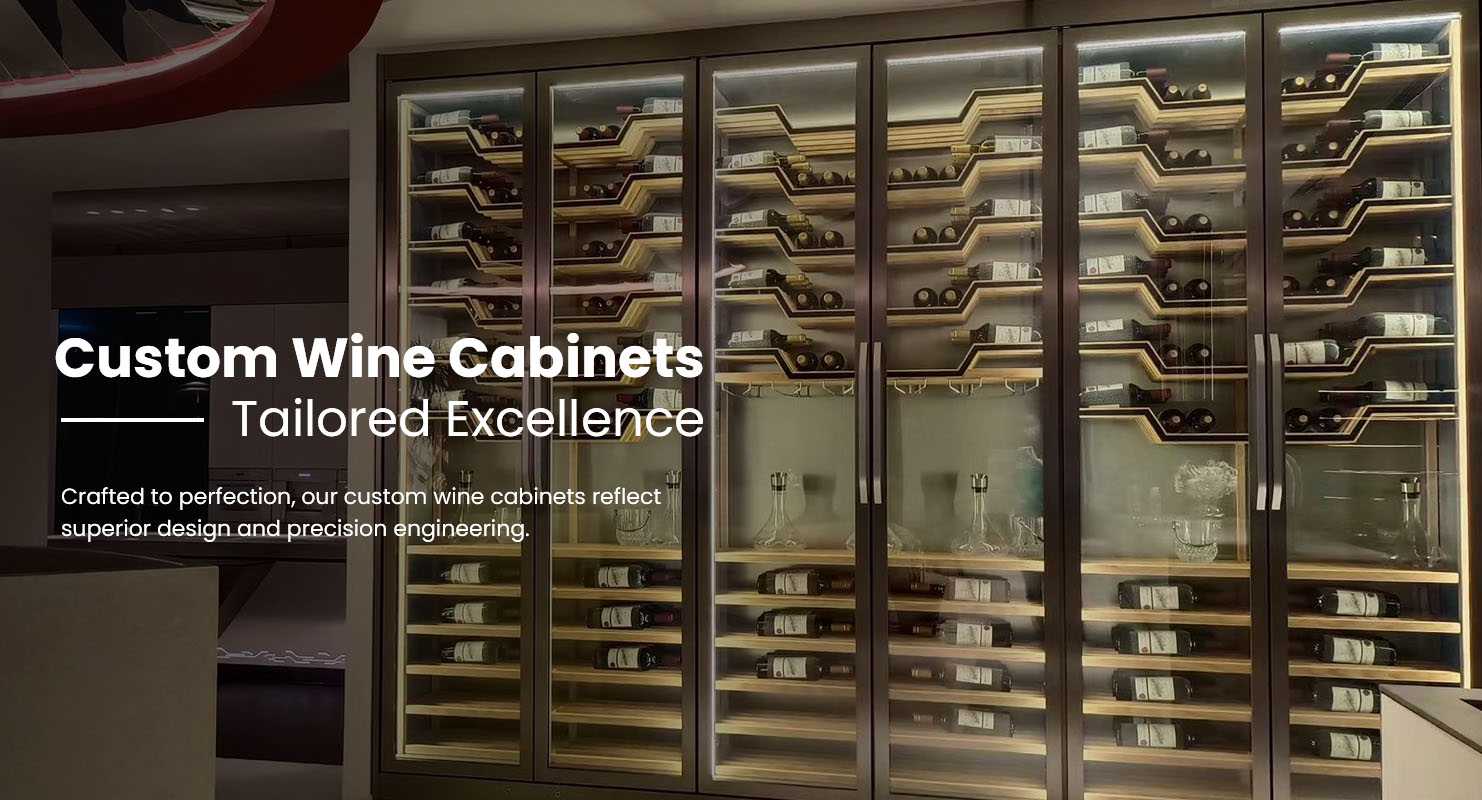
Compressor Wine Cabinet vs Thermoelectric Wine Cabinet: Which Model Is Better for Commercial Use?
A compressor wine cabinet is generally better for commercial use because it provides stronger cooling performance, larger capacity options, and better adaptability for demanding environments.
What Is The Difference Between Compressor And Thermoelectric Wine Cabinets?
The main difference between compressor and thermoelectric wine cabinets is the cooling technology used to maintain the wine storage environment.
A compressor wine cabinet uses a refrigeration system with a compressor and refrigerant cycle to remove heat and maintain stable temperatures.
A thermoelectric wine cabinet uses semiconductor technology to transfer heat through an electrical current without a traditional compressor system.
| Feature | Compressor Wine Cabinet | Thermoelectric Wine Cabinet |
|---|---|---|
| Cooling Technology | Compressor refrigeration | Semiconductor cooling |
| Cooling Capacity | Strong | Moderate |
| Cabinet Size | Small to Large | Mainly Small |
| Temperature Stability | Higher | Depends on environment |
| Commercial Applications | Wide | Limited |
| Operating Noise | Moderate | Very Low |
From a Wine Cooler manufacturer’s perspective, commercial applications require more than basic cooling. Capacity, reliability, temperature stability, and long-term operation are key factors.
Why Do Commercial Wine Cabinets Need Strong Cooling Performance?
Commercial environments usually have higher usage demands than residential applications.
Common commercial scenarios include:
Restaurants
Hotels
Wine bars
Clubs
Retail stores
Hospitality projects
These applications often require:
Frequent door opening
Larger bottle storage
Continuous operation
Stable temperature control
A suitable cooling system must maintain performance under these conditions.
Why Are Compressor Wine Cabinets Suitable For Commercial Use?
Compressor wine cabinets are widely used in commercial applications because they provide stronger overall performance.
Higher Cooling Capacity
Compressor systems can remove heat more effectively, making them suitable for larger cabinets and heavier storage requirements.
Applications include:
Large wine displays
Restaurant wine storage
Hotel beverage areas
Professional wine rooms
Better Temperature Recovery
Commercial users frequently open wine cabinets during service periods.
Compressor systems can recover temperature more quickly after:
Door openings
Bottle loading
External temperature changes
Better Performance In Different Climates
Commercial projects may operate in different regions with varying temperatures.
Compressor wine cabinets generally provide better adaptability in:
Warm climates
High ambient temperatures
Long operating hours
Support Larger Product Designs
Manufacturers can develop compressor wine cabinets in various configurations:
Built-in wine cabinets
Freestanding wine cabinets
Dual zone models
Large-capacity units
What Are The Advantages Of Thermoelectric Wine Cabinets For Commercial Use?
Thermoelectric wine cabinets also have specific commercial applications.
Low Operating Noise
The absence of a compressor creates quieter operation.
This can be useful for:
Offices
Small lounges
Private rooms
Quiet hospitality environments
Minimal Vibration
Low vibration can benefit wine storage where mechanical movement needs to be minimized.
Compact Product Design
Thermoelectric systems are suitable for:
Small countertop wine cabinets
Compact hotel room units
Personal wine displays
However, their cooling capacity is usually more limited compared with compressor systems.
Which Wine Cabinet Is Better For Restaurants?
Compressor wine cabinets are generally more suitable for restaurants.
Restaurants often need:
Multiple wine categories
Frequent access
Reliable cooling
Larger storage capacity
A compressor system can better support daily restaurant operations.
For restaurants with only a small wine selection or limited space, compact thermoelectric models may also be considered.
Which Wine Cabinet Is Better For Hotels?
The suitable choice depends on the hotel application.
| Hotel Application | Recommended Solution |
|---|---|
| Hotel Restaurant | Compressor |
| Wine Lounge | Compressor |
| Premium Suite Mini Storage | Thermoelectric |
| Lobby Wine Display | Compressor |
| Small Guest Room Use | Thermoelectric |
Large hospitality areas usually require compressor performance, while compact personal-use applications may benefit from thermoelectric advantages.
Which Model Provides Better Long-Term Reliability?
Commercial equipment needs reliable operation over extended periods.
Compressor wine cabinets generally provide advantages through:
Strong cooling systems
Stable temperature control
Larger application range
Proven refrigeration technology
Thermoelectric wine cabinets can also provide reliable performance when used within suitable conditions.
Reliability depends on:
Product design
Component quality
Manufacturing standards
Maintenance practices
Which Model Provides Better Energy Efficiency For Businesses?
Energy efficiency depends on product design and operating conditions.
Compressor Wine Cabinet Efficiency Factors
Important factors include:
Compressor efficiency
Cabinet insulation
Door sealing
Temperature settings
Thermoelectric Wine Cabinet Efficiency Factors
Important factors include:
Cabinet size
Ambient temperature
Cooling module performance
Heat dissipation
For small units, thermoelectric systems can be efficient.
For larger commercial wine storage, compressor systems often provide better overall efficiency because they deliver stronger cooling performance.
Which Model Offers Better Commercial OEM Opportunities?
Both technologies provide OEM and ODM possibilities.
Compressor Wine Cabinet OEM Advantages
Suitable for:
Restaurant equipment suppliers
Hotel projects
Premium appliance brands
Commercial distributors
Customization options include:
Capacity
Temperature zones
Cabinet dimensions
Door design
Control systems
Thermoelectric Wine Cabinet OEM Advantages
Suitable for:
Compact appliance brands
Retail products
Small-space solutions
Customization options include:
Product size
Exterior design
Packaging
Market-specific appearance
Which Model Is Better For Commercial Wine Displays?
Compressor wine cabinets generally provide stronger display capabilities.
Reasons include:
Larger glass door designs
Better temperature control
Larger bottle capacity
Longer operating periods
They are commonly used in:
Wine shops
Restaurants
Hotels
Bars
Thermoelectric models are more suitable for small displays where space and noise are primary concerns.
What Should Businesses Consider Before Choosing A Wine Cabinet?
Important factors include:
Storage Capacity
Commercial users should estimate daily bottle turnover and storage volume.
Operating Environment
Temperature conditions affect cooling performance.
Usage Frequency
Frequent access requires stronger temperature recovery.
Product Positioning
Premium projects may require higher-end designs and functions.
Maintenance Support
Commercial equipment needs reliable service support.
What Are Common Mistakes When Selecting Commercial Wine Cabinets?
Choosing Based Only On Purchase Price
Lower initial cost may create higher long-term operating issues.
Ignoring Application Requirements
A hotel, restaurant, and retail store may require different solutions.
Selecting Insufficient Cooling Capacity
Small cooling systems may not support commercial workloads.
Overlooking Product Reliability
Commercial equipment must operate consistently over long periods.
How Does A wine cooler manufacturer Support Commercial Projects?
A professional wine cooler manufacturer supports commercial customers through:
Product selection assistance
Custom design solutions
OEM and ODM services
Quality testing
Production management
Manufacturing experience helps create wine cabinet solutions suitable for different business applications.
Which Is Better For Commercial Use: Compressor Or Thermoelectric Wine Cabinet?
A compressor wine cabinet is generally better for commercial use because it provides stronger cooling performance, wider capacity options, and better adaptability for restaurants, hotels, and professional wine storage.
A thermoelectric wine cabinet is suitable for specific commercial applications where compact size, quiet operation, and low vibration are priorities.
For most commercial wine storage projects, compressor technology provides a broader and more reliable solution.
FAQ
Are Compressor Wine Cabinets Better For Restaurants?
Yes. They usually provide stronger cooling performance and larger storage capacity.
Can Thermoelectric Wine Cabinets Be Used Commercially?
Yes. They are suitable for compact and low-noise applications.
Which Wine Cabinet Is Better For Hotels?
Large hotel wine storage areas usually benefit from compressor systems, while small guest-room applications may use thermoelectric models.
Do Commercial Wine Cabinets Need Stronger Cooling?
Yes. Commercial environments usually require stable operation under frequent use.
Which Technology Has More Commercial Applications?
Compressor wine cabinets generally support a wider range of commercial scenarios.