

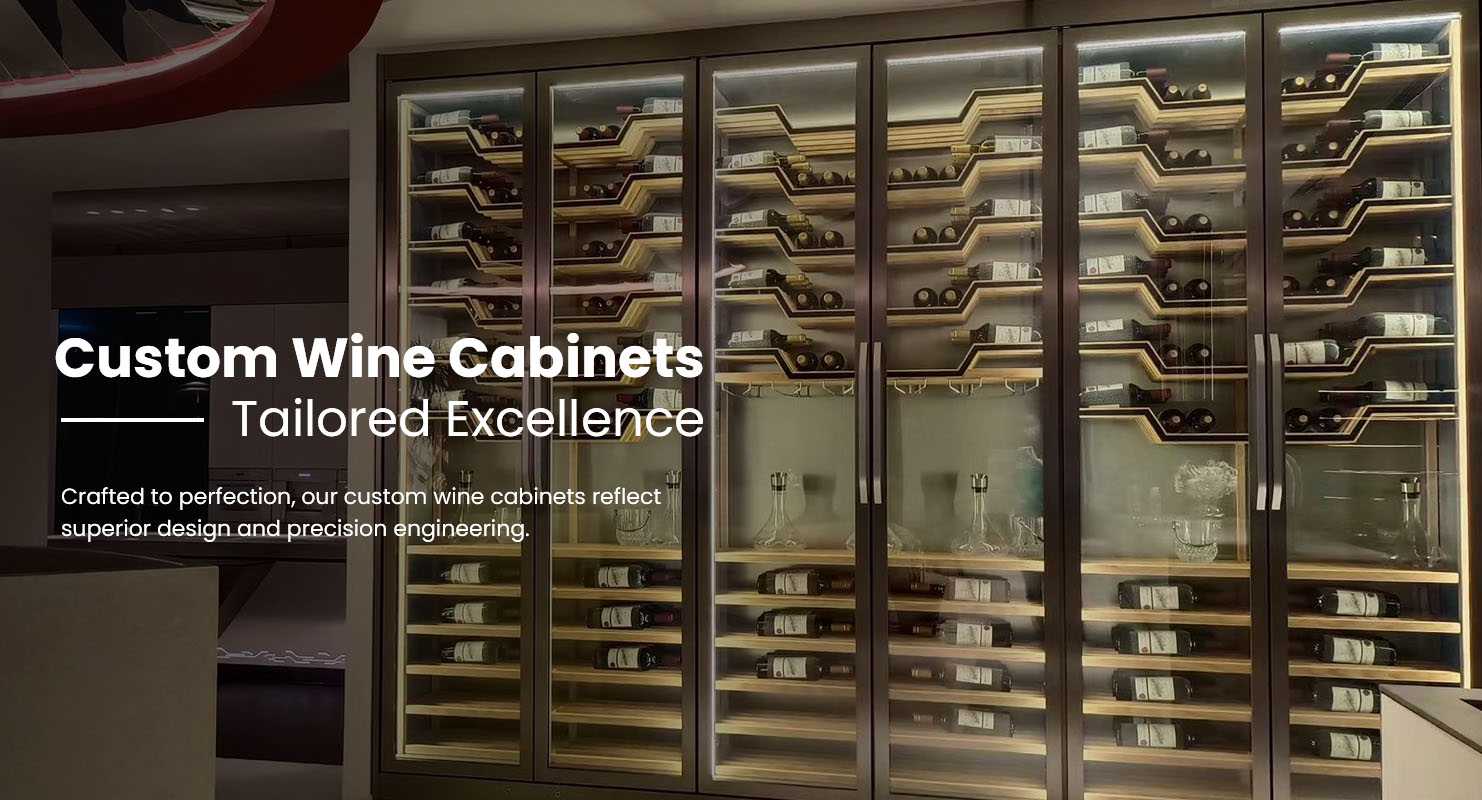
Active Cooling Wine Cooler vs Passive Cooling Wine Storage: Which Provides Better Protection?
An active cooling Wine Cooler provides better protection because it maintains a controlled storage environment, while passive cooling wine storage is suitable for naturally stable locations with simpler requirements.
What Is The Difference Between Active Cooling And Passive Cooling Wine Storage?
The main difference between active cooling and passive cooling wine storage is whether the storage environment uses an active temperature control system.
An active cooling wine cooler uses mechanical or electronic cooling technology to regulate internal temperature and maintain stable storage conditions.
A passive cooling wine storage system relies on natural environmental conditions, insulation, underground locations, or architectural design to reduce temperature changes without an active cooling unit.
| Feature | Active Cooling Wine Cooler | Passive Cooling Wine Storage |
|---|---|---|
| Temperature Control | Active adjustment | Natural regulation |
| Temperature Accuracy | Higher | Depends on environment |
| Climate Adaptability | Strong | Limited |
| Installation Flexibility | High | Requires suitable location |
| Maintenance | Requires equipment care | Lower system maintenance |
| Application | Modern wine storage | Traditional wine cellars |
From a wine cooler manufacturer’s perspective, active and passive storage solutions serve different needs. The right choice depends on storage goals, climate conditions, space availability, and wine collection requirements.
Why Is Temperature Control Important For Wine Protection?
Wine quality can be affected by unstable storage environments.
Important protection factors include:
| Storage Factor | Recommended Condition |
|---|---|
| Temperature | 10°C–15°C |
| Ideal Storage Temperature | Around 12°C |
| Humidity | 50%–70% |
| Light Exposure | Low UV |
| Temperature Variation | Minimal |
A suitable wine storage solution should reduce temperature fluctuations and protect wine from environmental changes.
How Does An Active Cooling Wine Cooler Protect Wine?
An active cooling wine cooler uses technology to create a controlled storage environment.
The system manages:
Temperature
Air circulation
Cooling recovery
Humidity balance
Common active cooling technologies include:
Compressor refrigeration
Electronic cooling systems
These systems allow wine storage conditions to remain stable even when outside conditions change.
What Are The Advantages Of Active Cooling Wine Coolers?
Better Temperature Stability
Active cooling systems continuously monitor and adjust internal conditions.
This helps protect wine from:
Seasonal temperature changes
Room temperature fluctuations
Frequent cabinet opening
Suitable For Different Climates
Active cooling wine coolers can operate in various environments, including:
Warm regions
Apartments
Restaurants
Commercial spaces
Flexible Installation Options
Unlike traditional wine cellars, active cooling products can be installed in:
Kitchens
Bars
Dining rooms
Dedicated wine rooms
Better For Long-Term Storage
Stable temperature control makes active cooling suitable for:
Wine aging
Premium collections
Professional storage
How Does Passive Cooling Wine Storage Work?
Passive cooling wine storage relies on natural environmental advantages.
Traditional examples include:
Underground wine cellars
Stone-built storage rooms
Naturally insulated spaces
The concept depends on:
Thick walls
Stable underground temperatures
Natural airflow
Reduced sunlight exposure
When environmental conditions are ideal, passive storage can provide effective protection.
What Are The Advantages Of Passive Cooling Wine Storage?
Lower Equipment Requirements
Passive storage does not require cooling machines or electrical systems.
Advantages include:
Lower operating costs
Fewer mechanical components
Reduced maintenance needs
Natural Storage Environment
Traditional wine cellars can provide stable conditions through:
Underground construction
Natural insulation
Architectural design
Suitable For Traditional Wine Cellar Projects
Passive storage can be valuable for:
Historic wine cellars
Large underground spaces
Traditional aging environments
Which Solution Provides Better Temperature Protection?
Active cooling wine coolers generally provide stronger temperature protection.
Comparison:
| Protection Factor | Active Cooling | Passive Cooling |
|---|---|---|
| Temperature Accuracy | Excellent | Depends on location |
| Climate Adaptability | High | Limited |
| Seasonal Control | Strong | Natural only |
| Installation Flexibility | High | Lower |
| Long-Term Monitoring | Possible | Limited |
Passive cooling performance depends heavily on the surrounding environment.
Which Solution Is Better For Modern Homes?
Active cooling wine coolers are generally more suitable for modern homes.
Reasons include:
Limited space availability
Flexible installation
Easy temperature control
Modern interior integration
Applications include:
Built-in wine coolers
Freestanding wine coolers
Home wine cabinets
Which Solution Is Better For Large Wine Collections?
The answer depends on the storage environment.
Active Cooling Advantages
Suitable for:
Large collections
Urban homes
Commercial storage
Climate-variable regions
Passive Cooling Advantages
Suitable for:
Large underground cellars
Naturally stable locations
Traditional wine storage projects
Professional collections often evaluate both environmental stability and storage management requirements.
Does Active Cooling Provide Better Humidity Control?
Yes, active cooling systems can better support controlled storage environments.
Humidity is important because:
Low humidity can affect cork condition
Excess humidity may encourage mold growth
A professional wine cooler design considers:
Cooling system operation
Air circulation
Cabinet sealing
Humidity balance
Passive storage depends mainly on natural environmental conditions.
Which Solution Is Better For Commercial Applications?
Active cooling wine coolers are generally more suitable for commercial applications.
| Application | Recommended Solution |
|---|---|
| Restaurant Wine Storage | Active Cooling |
| Hotel Wine Display | Active Cooling |
| Retail Wine Cabinet | Active Cooling |
| Traditional Wine Cellar | Passive Cooling |
| Underground Aging Room | Passive Cooling |
Commercial businesses usually need predictable temperature control and operational reliability.
Which Solution Has Better Energy Efficiency?
Energy efficiency depends on the specific design.
Active Cooling Efficiency Factors
Include:
Cooling system efficiency
Insulation quality
Cabinet sealing
Temperature settings
Passive Cooling Efficiency Factors
Include:
Building structure
Location
Natural insulation
Climate conditions
Passive storage may have lower operating costs, while active systems provide more predictable performance.
Which Solution Offers Better OEM And ODM Opportunities?
Active cooling wine coolers provide more opportunities for product development.
Customization options include:
Cabinet size
Cooling technology
Temperature zones
Door design
Interior configuration
Passive cooling solutions are usually related to architectural projects rather than standardized appliance manufacturing.
What Should Buyers Consider Before Choosing A Wine Storage Solution?
Important factors include:
Storage Location
Urban homes often require active cooling solutions.
Climate Conditions
Regions with large temperature changes benefit from controlled cooling.
Collection Value
Premium wines require stable protection.
Space Availability
The available installation area affects the solution.
Long-Term Usage
Storage goals determine the required technology.
What Are Common Mistakes When Choosing Wine Storage Methods?
Relying Only On Natural Conditions
Passive storage may not work in unstable climates.
Ignoring Temperature Monitoring
Wine requires consistent environmental control.
Choosing Equipment Without Considering Space
The storage solution should match the installation environment.
Focusing Only On Operating Cost
Protection quality is also important.
How Does A Wine Cooler Manufacturer Improve Wine Protection?
A professional wine cooler manufacturer focuses on:
Cooling system development
Temperature control accuracy
Cabinet insulation
Airflow design
Product testing
Quality management
These capabilities help create reliable active cooling wine storage solutions.
Which Provides Better Protection: Active Cooling Wine Cooler Or Passive Cooling Wine Storage?
An active cooling wine cooler provides better overall protection because it offers controlled temperature management, wider climate adaptability, and more flexible installation options.
Passive cooling wine storage remains valuable for traditional wine cellars and naturally stable environments where architectural conditions support consistent storage.
For modern wine storage needs, active cooling technology provides a more predictable and controllable solution.
FAQ
Is Active Cooling Better For Wine Aging?
Yes. Active cooling provides stronger temperature control for long-term storage.
Can Passive Cooling Store Wine Properly?
Yes, when the environment naturally maintains suitable conditions.
Which Solution Is Better For Homes?
Active cooling wine coolers are usually more practical for modern homes.
Does Passive Cooling Require Electricity?
Traditional passive storage does not require active cooling equipment.
Which Method Is Better For commercial wine storage?
Active cooling is generally preferred because it provides consistent and controllable conditions.