

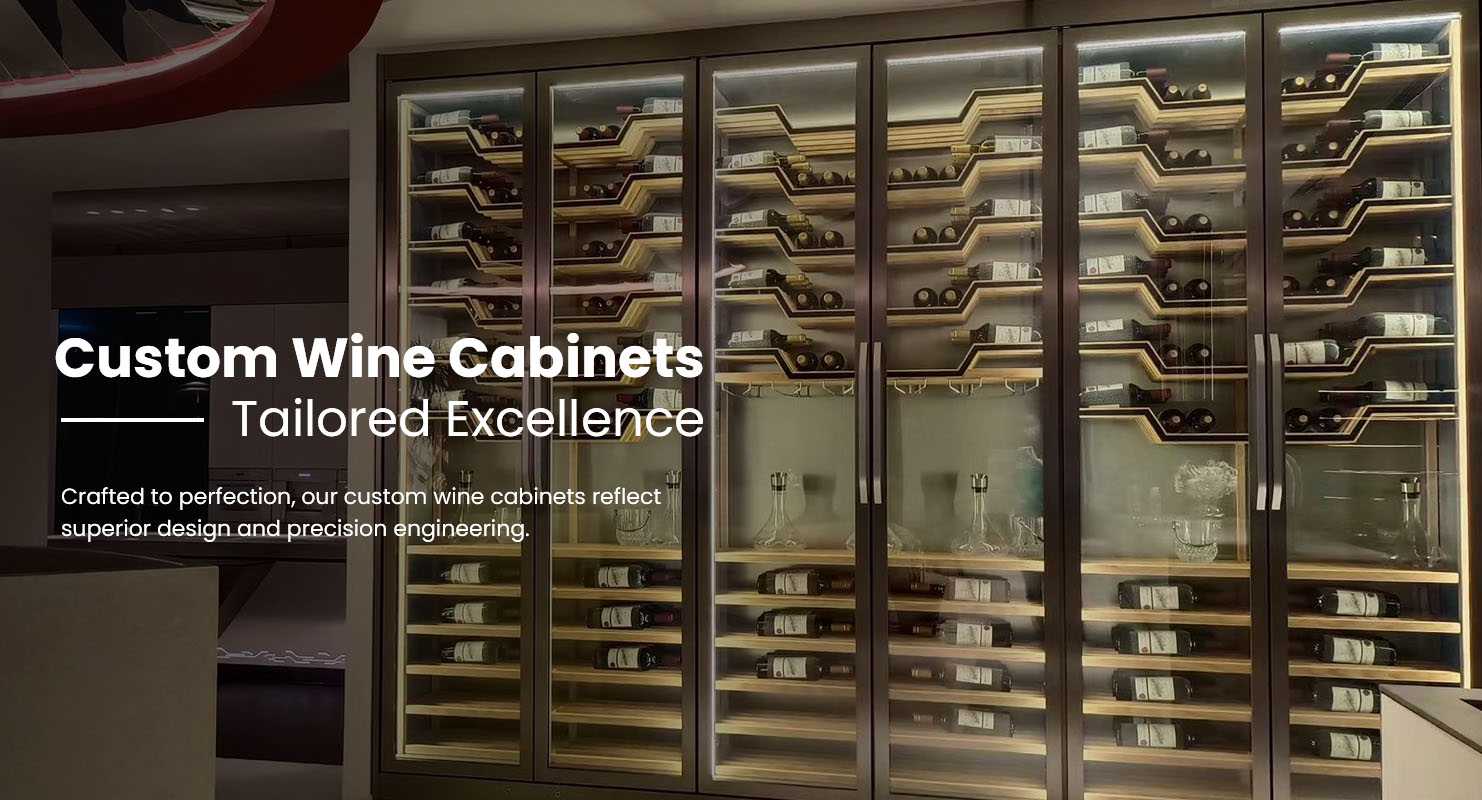
Commercial Compressor Wine Cooler vs Home Thermoelectric Wine Cooler: What Are the Differences?
A commercial compressor Wine Cooler is designed for stronger cooling performance, larger capacity, and continuous operation, while a home thermoelectric wine cooler focuses on compact size, quiet operation, and simple storage needs.
What Is The Difference Between Commercial Compressor And Home Thermoelectric Wine Coolers?
The main difference between commercial compressor wine coolers and home thermoelectric wine coolers is their cooling technology, application purpose, and performance requirements.
A commercial compressor wine cooler uses a compressor refrigeration system to provide stable cooling for restaurants, hotels, wine shops, and professional storage environments.
A home thermoelectric wine cooler uses semiconductor cooling technology and is mainly designed for personal wine storage in residential spaces.
| Feature | Commercial Compressor Wine Cooler | Home Thermoelectric Wine Cooler |
|---|---|---|
| Cooling Technology | Compressor refrigeration | Semiconductor cooling |
| Target Application | Commercial use | Home use |
| Cooling Capacity | Strong | Moderate |
| Storage Capacity | Medium to Large | Small |
| Operation Time | Continuous use | Occasional use |
| Noise Level | Moderate | Very Low |
From a wine cooler manufacturer’s perspective, these two products are developed for completely different customer requirements. The correct choice depends on usage environment, storage volume, and performance expectations.
Why Do commercial wine coolers Require Stronger Cooling Systems?
Commercial environments create higher demands than residential applications.
Restaurants, hotels, and wine retailers usually require:
Larger bottle capacity
Frequent door opening
Long operating hours
Stable temperature control
Reliable performance
A cooling system must maintain consistent conditions even during intensive daily use.
How Does A Commercial Compressor Wine Cooler Work?
A commercial compressor wine cooler uses a refrigeration cycle to remove heat from inside the cabinet.
The process includes:
The compressor compresses refrigerant.
The condenser releases heat.
The evaporator absorbs heat from the storage area.
The cooling system maintains the target temperature.
This structure provides stronger cooling performance for demanding applications.
What Are The Advantages Of Commercial Compressor Wine Coolers?
Higher Cooling Capacity
Commercial compressor systems can support:
Larger cabinets
More bottles
Multiple temperature zones
Professional storage requirements
Better Temperature Stability
Commercial users need consistent conditions.
Compressor systems provide advantages in:
Temperature recovery
Long-term operation
Climate adaptability
Suitable For Professional Applications
Common applications include:
Restaurants
Hotels
Wine bars
Wine shops
Private clubs
Wider Product Options
Manufacturers can develop:
Built-in commercial wine coolers
Freestanding wine coolers
Large-capacity wine cabinets
Dual zone wine storage solutions
How Does A Home Thermoelectric Wine Cooler Work?
A home thermoelectric wine cooler uses semiconductor modules to transfer heat away from the cabinet.
The system usually includes:
Thermoelectric cooling plates
Heat sinks
Fans
Heat dissipation components
Because it does not use a compressor, the structure is simpler.
What Are The Advantages Of Home Thermoelectric Wine Coolers?
Quiet Operation
Thermoelectric systems operate with very low noise.
This makes them suitable for:
Bedrooms
Apartments
Offices
Small living spaces
Low Vibration
Without compressor movement, vibration is minimized.
Compact Design
They are suitable for:
Small wine collections
Countertop storage
Personal wine cabinets
Easy Installation
Home users can place them in various locations without complex installation requirements.
Which Product Has Better Temperature Stability?
Commercial compressor wine coolers generally provide better temperature stability.
Comparison:
| Performance Factor | Commercial Compressor | Home Thermoelectric |
|---|---|---|
| Cooling Strength | Excellent | Moderate |
| Temperature Recovery | Faster | Slower |
| Large Cabinet Support | Excellent | Limited |
| Climate Adaptability | Higher | More Sensitive |
| Long-Term Storage | Better | Suitable For Small Collections |
For professional wine storage, stronger temperature control is usually required.
Which Product Is Better For Long-Term Wine Storage?
Commercial compressor wine coolers are generally more suitable for long-term wine storage.
Reasons include:
Stable temperature control
Strong cooling performance
Better operation under changing conditions
Support for larger collections
Home thermoelectric wine coolers are more suitable for:
Short-term storage
Personal collections
Small bottle quantities
Why Are Thermoelectric Wine Coolers Popular For Homes?
Home users often prioritize convenience.
Thermoelectric wine coolers provide:
Compact size
Quiet operation
Simple installation
Lower space requirements
They are suitable for consumers who want basic wine storage without large equipment.
Which Product Is Better For Restaurants And Hotels?
Commercial compressor wine coolers are usually the preferred choice.
Restaurants and hotels need:
Reliable daily operation
Larger capacity
Faster cooling recovery
Stable storage conditions
Thermoelectric models may be used only in limited applications such as:
Guest rooms
Small lounges
Personal areas
Which Product Requires More Maintenance?
Maintenance requirements are different.
| Maintenance Factor | Commercial Compressor | Home Thermoelectric |
|---|---|---|
| System Complexity | Higher | Lower |
| Professional Service | More Common | Less Required |
| Component Quantity | More | Fewer |
| Large-System Maintenance | Required | Limited |
Commercial products require more structured maintenance because they operate under heavier workloads.
Which Product Provides Better Energy Efficiency?
Energy efficiency depends on product design and usage.
Commercial Compressor Efficiency Factors
Include:
Compressor performance
Cabinet insulation
Temperature settings
Door sealing
Home Thermoelectric Efficiency Factors
Include:
Cabinet size
Ambient temperature
Cooling module efficiency
Thermoelectric systems can be efficient for small products, while compressor systems are often more suitable for larger storage requirements.
Which Product Has Better OEM And ODM Opportunities?
Both product categories provide customization opportunities.
Commercial Compressor Wine Cooler Customization
Options include:
Capacity
Temperature zones
Cabinet dimensions
Commercial configurations
Branding solutions
Suitable for:
Appliance brands
Hospitality suppliers
Professional distributors
Home Thermoelectric Wine Cooler Customization
Options include:
Product size
Appearance
Packaging
Retail design
Suitable for:
Lifestyle brands
Online retailers
Entry-level markets
What Should Buyers Consider Before Choosing Between These Products?
Important factors include:
Usage Environment
Commercial locations require stronger systems.
Storage Volume
Large collections need higher cooling capacity.
Operation Frequency
Frequent access requires faster temperature recovery.
Space Availability
Homes often require compact solutions.
Market Positioning
Different customers have different expectations.
What Are Common Mistakes When Comparing Commercial And Home Wine Coolers?
Choosing Based Only On Price
Lower cost may not meet long-term requirements.
Ignoring Application Differences
Commercial and home products solve different problems.
Selecting Insufficient Cooling Capacity
Small systems may fail in demanding environments.
Focusing Only On Size
Performance requirements should also be considered.
How Does A wine cooler manufacturer Develop Different Solutions?
A professional wine cooler manufacturer develops products according to application requirements.
Capabilities include:
Compressor wine cooler production
Thermoelectric wine cooler development
OEM and ODM customization
Quality testing
Production management
Different cooling technologies allow manufacturers to serve different market segments.
What Are The Main Differences Between Commercial Compressor And Home Thermoelectric Wine Coolers?
Commercial compressor wine coolers focus on:
Strong cooling performance
Large storage capacity
Professional applications
Long operating hours
Home thermoelectric wine coolers focus on:
Compact design
Quiet operation
Simple storage
Residential convenience
For commercial projects, compressor technology is generally more suitable. For personal home storage, thermoelectric technology provides a practical solution.
FAQ
Can A Home Thermoelectric Wine Cooler Be Used Commercially?
It can be used for small applications, but it is usually not suitable for demanding commercial storage.
Why Do Restaurants Prefer Compressor Wine Coolers?
Because they require stronger cooling capacity and stable operation.
Are Thermoelectric Wine Coolers Good For Home Use?
Yes. They are suitable for small collections and compact spaces.
Which Wine Cooler Has Better Long-Term Performance?
Commercial compressor wine coolers generally provide stronger long-term performance.
Should Brands Develop Both Types Of Wine Coolers?
Yes. Different products can target different customer segments.