

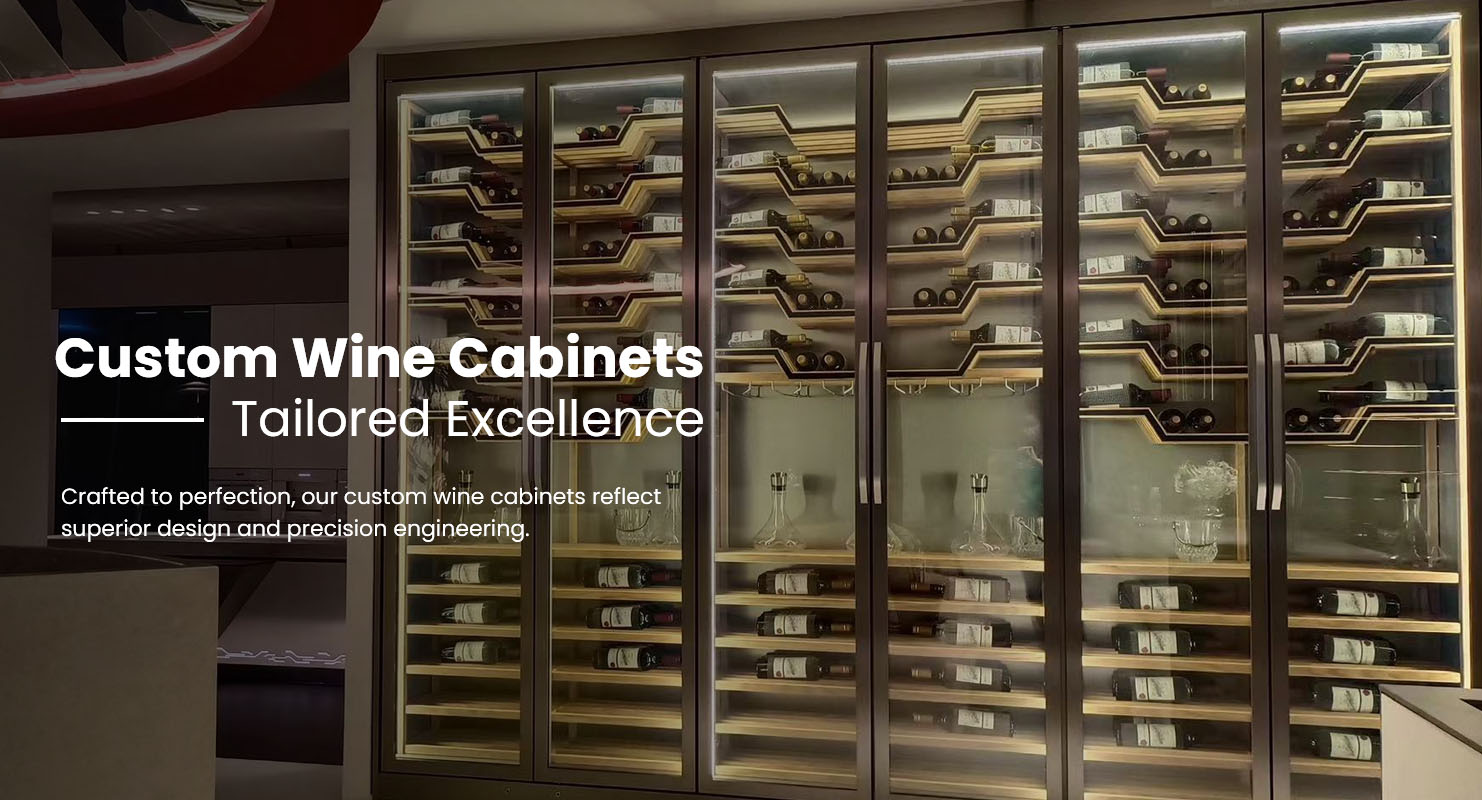
How Do You Make Your Own Wine Cellar starts with one decision: do you want a decorative storage corner, or a controlled wine storage system that protects bottle quality for years? A true wine cellar is not only shelves and glass doors. It needs stable temperature, suitable humidity, insulation, low vibration, and controlled lighting.
-
2026-05-04
-
2026-05-01A home wine cellar can cost anywhere from about $5,000 to over $100,000, while many full projects land in the $15,000 to $60,000 range. The spread is wide because cellar cost is driven by room preparation, insulation, cooling system sizing, shelving design, glass area, and installation complexity rather than by cabinetry alone.
-
2026-04-30A home wine cellar can cost anywhere from about $5,000 to $100,000, while the more common full-project range is often $15,000 to $60,000 and the average is around $33,750 to $40,000. The final number depends on room size, insulation, cooling method, shelving, glass area, and the level of customization. For long-term storage, the cellar should also hold a stable 10 to 15°C range, so cost is tied to engineering performance, not only interior finish.
-
2026-04-29A glass enclosed wine cellar usually costs more than a standard enclosed cellar because the project must balance appearance, insulation, sealing, and cooling performance at the same time. Recent pricing references place a general wine cellar build at about 15,000 to 60,000 dollars, while glass wine cellars are often around 18,000 to 55,000 dollars or more depending on size, glass area, and customization level.
-
2026-04-28A wine cellar is usually kept at 10 to 15°C for long-term storage, and many traditional cellar references extend the acceptable range to 10 to 16°C. The most important point is not chasing the coldest setting. It is keeping the temperature steady day after day so the wine ages slowly and predictably.
-
2026-04-27There is no single BTU number that fits every wine cellar. The right cooling capacity depends on cellar volume, insulation quality, glass area, door sealing, ambient temperature, and heat load from lighting or nearby equipment.
-
2026-04-24A wine cellar can show up on an appraisal, but it does not automatically receive a large value adjustment. In appraisal practice, the key issue is market reaction. Fannie Mae states that adjustments should reflect how the market responds to a property difference, not simply how much the owner spent building it. That means a wine cellar is more likely to matter when it is clearly functional, well integrated, and relevant to the local buyer profile.
-
2026-04-23A wine cellar can add value to an appraisal, but not in every market and not at the same level in every property. The added value usually depends on local buyer demand, home price segment, build quality, and whether the cellar is a true climate controlled installation. Recent housing commentary notes that wine cellars tend to matter most in luxury homes, while appraisal treatment can be more conservative than owner expectations.
-
2026-04-22A wine cellar can add value, but only when it is built as a real storage system rather than a visual feature alone. In the housing market, added value usually comes from function, finish quality, and long-term reliability. Proper wine storage is commonly kept around 12 to 15°C with about 55 to 75 percent humidity, and that controlled environment helps preserve collection quality while also strengthening the premium image of the property.
-
2026-04-21A wine cellar works best when storage conditions stay stable rather than simply cold. According to Purdue Extension, wine is traditionally stored at 10 to 16°C, while WSET recommends 10 to 15°C for long term storage. This range matters because high heat and temperature fluctuation are among the biggest risks to wine quality.
-
2026-04-20WINTON explains that wine cellar cooling units work by taking heat out of the cellar and releasing it elsewhere through a controlled refrigeration cycle. In small projects, a through-the-wall unit can vent warm air into an adjacent conditioned space, while split and ducted systems can place heat-releasing components in another ventilated area.
-
2026-04-17A do it yourself wine cellar kit can be a practical starting point, but only when the project is treated as a controlled storage system rather than a simple furniture assembly job. Long term wine storage is generally kept at 10 to 15°C, and many cellar references place suitable humidity around 60 to 70 percent.