
How To Buy A Wine Cellar
Buying a wine cellar is not only about selecting a storage cabinet with enough bottle capacity. A professional wine cellar should provide a stable environment, suitable temperature control, humidity management, durable materials, and a design that matches the installation space.
For residential collections, restaurants, hotels, wine shops, and private clubs, choosing the right wine cellar requires evaluating storage requirements, cooling technology, customization options, and manufacturing quality. WINTON specializes in Wine Cooler and custom wine cabinet manufacturing, providing customized wine storage solutions for different applications. (WENTENG)
Determine Your Wine Storage Requirements First
Before buying a wine cellar, define how you plan to use it.
Important factors include:
| Requirement | Consideration |
|---|---|
| Bottle quantity | Current collection and future expansion |
| Installation location | Kitchen, basement, room, bar, or commercial space |
| Wine type | Red wine, white wine, sparkling wine |
| Display needs | Storage only or premium presentation |
| Control requirements | Temperature and humidity management |
A small home collection may only require a compact wine cooler, while large collections or commercial projects often need custom wine storage systems.
WINTON offers different wine storage solutions including wine coolers, custom wine cabinets, built-in wine coolers, and customized wine cellar systems to match different project requirements. (WENTENG)
Choose The Right Wine Cellar Type
The best wine cellar depends on the available space and storage goals.
Wine Cooler Cabinet
A wine cooler cabinet is suitable for:
Apartments
Modern kitchens
Small collections
Restaurants with limited space
Advantages:
Easy installation
Built-in cooling system
Compact design
Temperature adjustment
Custom Wine Cabinet
A custom wine cabinet is designed for projects requiring specific dimensions, materials, and interior layouts.
Advantages:
Flexible size
Customized appearance
Adjustable storage structure
Better space utilization
Walk-In Wine Cellar
A walk-in wine cellar is suitable for:
Luxury residences
Hotels
Wine clubs
Large collections
Advantages:
Large capacity
Premium display effect
Custom interior design
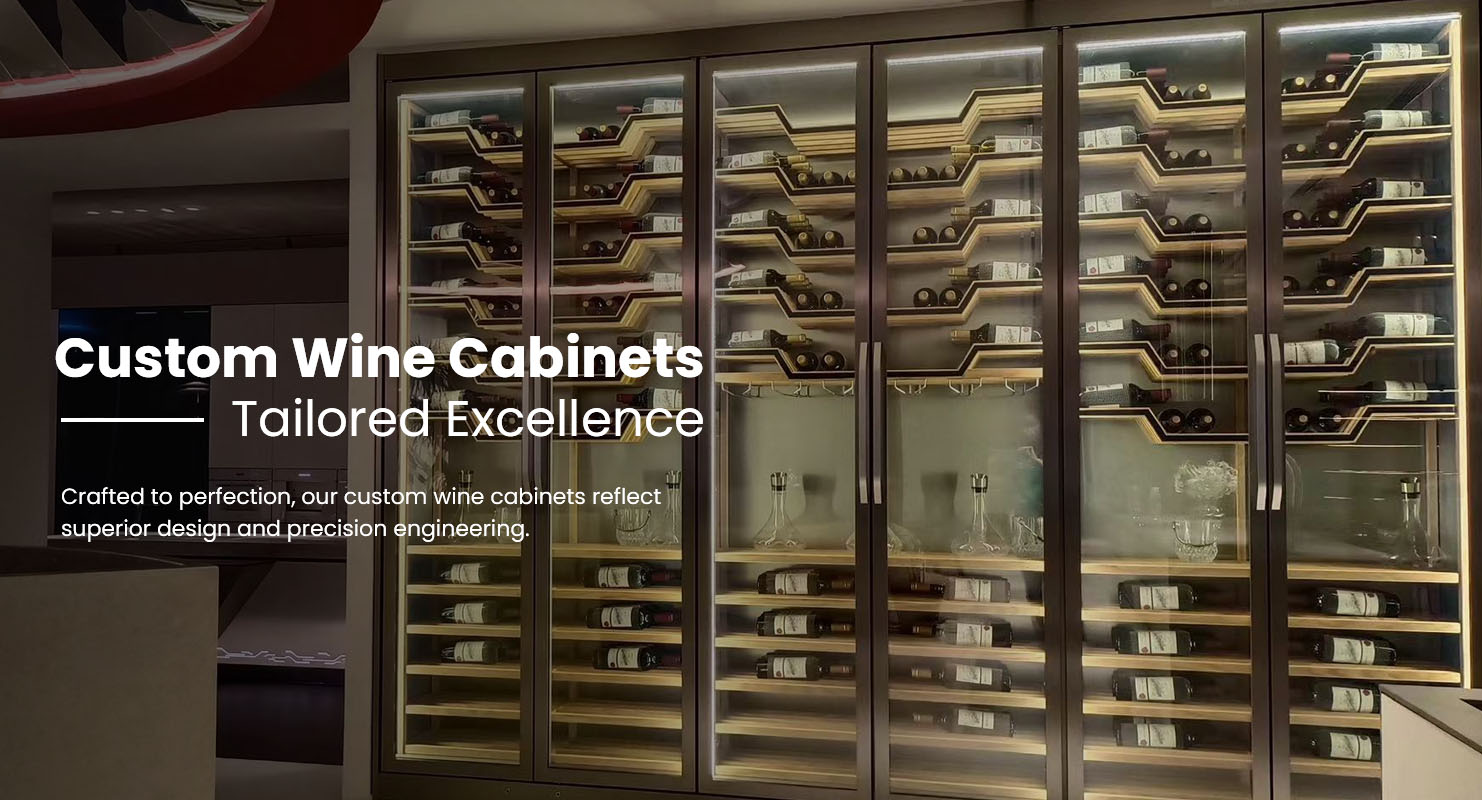
WINTON provides custom built wine cabinets with personalized dimensions, materials, layouts, and temperature control systems for residential and commercial applications. (WENTENG)
Check Temperature And Humidity Performance
Wine quality depends heavily on storage conditions.
Professional wine storage generally requires:
| Factor | Recommended Range |
|---|---|
| Temperature | Around 12°C to 15°C |
| Humidity | Around 50% to 70% |
| Lighting | Low UV exposure |
| Vibration | Minimal disturbance |
A wine cellar should maintain stability rather than simply reach a low temperature. Frequent temperature changes may accelerate wine aging, while unsuitable humidity levels can affect cork performance and bottle appearance.
When buying a wine cellar, check:
Cooling system type
Temperature accuracy
Humidity management
Air circulation design
Energy efficiency
WINTON wine cabinets use temperature control systems and insulation structures designed to maintain stable wine storage environments. (WENTENG)
Evaluate Materials And Construction Quality
The materials used in a wine cellar directly influence durability and appearance.
Common materials include:
| Material | Application |
|---|---|
| Tempered glass | Doors and display areas |
| Stainless steel | Structural components |
| Solid wood | Shelves and interior design |
| Insulation foam | Thermal protection |
When selecting a wine cellar, consider:
Moisture resistance
Structural strength
Door sealing performance
Insulation quality
Surface finishing
For premium wine storage projects, materials should balance aesthetics and functionality.
WINTON combines stainless steel, tempered glass, wood components, and insulation systems to create durable wine storage products with both decorative and practical value. (WENTENG)
Consider Customization Options
Standard wine cellars may not fit every space. Custom manufacturing allows products to match specific project requirements.
Customization options include:
Cabinet dimensions
Bottle capacity
Door design
Interior layout
Material selection
Color and finishing
A professional OEM and ODM process usually includes:
Project Evaluation
Manufacturers review:
Installation environment
Storage capacity
Cooling requirements
Design style
Local standards
Product Development
Key development points include:
Structural design
Cooling performance
Energy efficiency
User experience
Production And Inspection
Manufacturing focuses on:
Material preparation
Component processing
Assembly accuracy
Performance testing
WINTON supports customized wine cabinet solutions through professional design, production, and quality control processes. (WENTENG)
Understand Manufacturer Capability Before Buying
Choosing between a manufacturer and a trader can affect customization ability, quality control, and long-term cooperation.
A direct manufacturer can provide:
Custom product development
Factory quality inspection
Engineering support
Material selection
Production control
Technical solutions
A trader mainly provides existing products, while a manufacturer can adjust designs according to specific requirements.
WINTON operates as a professional wine storage solution provider with research, development, production, and sales capabilities. The factory includes production processes such as shearing, bending, grooving, foaming, welding, and testing to control product quality. (WENTENG)
Check Manufacturing And Quality Control Process
A reliable wine cellar manufacturer should have a complete production system.
Typical manufacturing process:
Product design
Material inspection
Sheet metal processing
Structural assembly
Insulation foaming
Cooling system installation
Electrical testing
Temperature calibration
Final inspection
Packaging
Quality checkpoints include:
| Quality Check | Purpose |
|---|---|
| Material inspection | Confirm durability |
| Dimension testing | Ensure installation accuracy |
| Cooling test | Verify performance |
| Electrical testing | Improve safety |
| Appearance inspection | Maintain consistency |
These processes help ensure stable performance during long-term use.
Consider Bulk Supply And Project Requirements
For larger projects, buying a wine cellar requires more detailed planning.
A project sourcing checklist should include:
| Item | Purpose |
|---|---|
| Storage capacity | Match collection size |
| Product dimensions | Fit installation area |
| Cooling performance | Maintain wine conditions |
| Materials | Meet design requirements |
| Voltage standard | Match destination market |
| Delivery schedule | Support installation |
For export projects, manufacturers should also consider:
Electrical standards
Packaging protection
Product documentation
Shipping requirements
Regional compliance
Why Choose A Factory-Based Wine Cellar Supplier
A professional factory can provide more than finished products. It can support the complete process from design to production.
Benefits include:
Better customization control
Stable production capacity
Direct quality management
Faster technical communication
More flexible project solutions
WINTON focuses on customized wine cabinets and wine storage solutions, providing products for homes, hotels, restaurants, clubs, and other applications. (WENTENG)
Previous: