
How To Build Your Own Underground Wine Cellar
Building your own underground wine cellar is an ideal way to create a naturally stable wine storage environment while maximizing unused underground space. Traditional wine caves have used underground conditions for centuries because soil and rock provide natural insulation against outdoor temperature changes. However, a modern underground wine cellar requires more than digging a space underground. Proper waterproofing, insulation, cooling control, ventilation, and storage design are essential for long-term wine preservation.
Professional wine storage conditions are generally maintained around 12°C to 15°C with humidity between 50% and 70% to protect wine quality and cork performance. (Wine Cellar Authority) WINTON specializes in Wine Cooler and custom wine cabinet manufacturing, providing customized wine storage solutions for residential, hospitality, and commercial projects.
Evaluate The Underground Space Before Construction
The first step in building an underground wine cellar is understanding the surrounding environment.
Before construction, check:
| Inspection Item | Purpose |
|---|---|
| Soil condition | Ensure structural safety |
| Groundwater level | Prevent moisture problems |
| Temperature stability | Determine cooling requirements |
| Access design | Support installation and maintenance |
| Available area | Plan storage capacity |
An underground location naturally reduces heat exchange, but moisture is usually the biggest challenge. Excess water penetration can damage structures, increase mold risk, and affect wine labels and wooden components.
A professional underground wine cellar should include:
Waterproof walls
Proper drainage
Moisture barriers
Stable ventilation
Controlled access
Create Proper Insulation And Moisture Protection
Unlike a simple storage room, an underground wine cellar must maintain a controlled micro-environment.
Important construction components include:
| Component | Function |
|---|---|
| Waterproof layer | Prevent groundwater penetration |
| Insulated walls | Reduce temperature transfer |
| Vapor barrier | Control moisture movement |
| Sealed door | Prevent air leakage |
| Proper flooring | Improve durability |
Even underground spaces may require active temperature control because modern buildings often experience heat transfer from surrounding areas. Professional cellar specifications commonly recommend insulation and vapor barriers to help cooling systems maintain stable conditions. (Squarespace)
WINTON applies insulated cabinet structures, integrated foaming technology, and professional engineering solutions to improve thermal stability in wine storage equipment.
Maintain Temperature And Humidity Control
The most important factor in an underground wine cellar is environmental consistency.
Recommended storage conditions:
| Factor | Recommended Range |
|---|---|
| Temperature | Around 12°C to 15°C |
| Humidity | Around 50% to 70% |
| Lighting | Low UV exposure |
| Vibration | Minimal |
Temperature stability is often more important than reaching an exact number. Frequent temperature changes can accelerate wine aging and affect cork sealing performance. (The Washington Post)
Humidity also needs careful management:
Below 50% humidity may dry corks
Above 75% humidity may increase mold risk
Stable humidity helps protect labels and storage materials
WINTON wine storage solutions integrate cooling systems designed to maintain stable temperature conditions for different wine collections.
Choose The Right Underground Wine Cellar Design
The design depends on collection size, available space, and usage requirements.
Common solutions include:
| Design Type | Application |
|---|---|
| Small underground wine room | Home collections |
| Built-in Wine Cellar | Luxury residences |
| Walk-in wine cellar | Large collections |
| commercial wine storage | Hotels and restaurants |
A customized wine cellar can include:
Wooden bottle racks
Glass display doors
LED lighting
Adjustable shelves
Temperature control systems
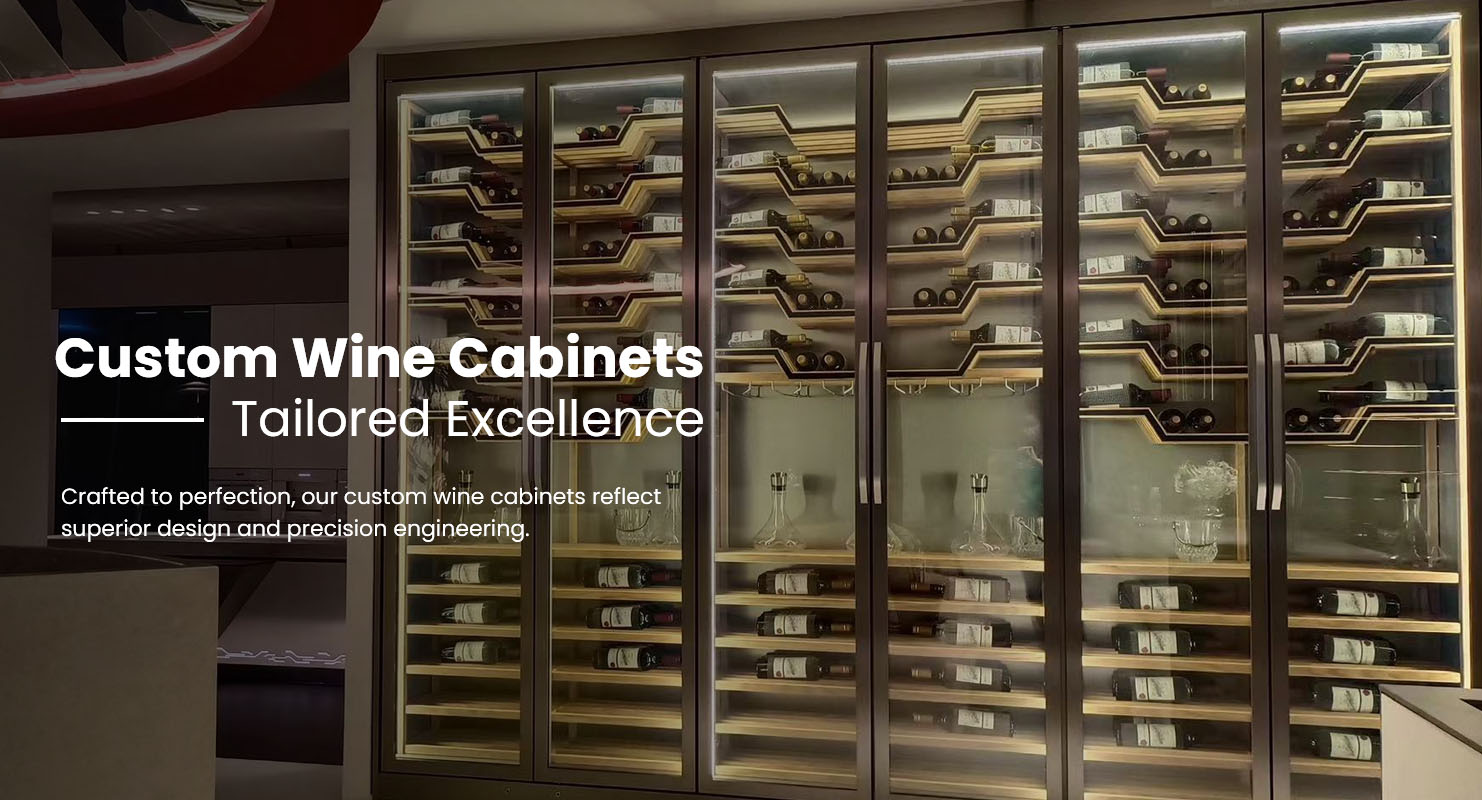
For projects with limited underground space, a custom wine cabinet may provide professional wine storage performance without major underground construction.
WINTON provides custom wine cabinets and wine storage solutions designed for different installation environments. (wintonwinecooler.com)
Plan Bottle Storage Layout
A well-designed underground wine cellar should combine storage efficiency with easy management.
Recommended layout:
Bottle Classification
Organize collections by:
Red wine
White wine
Sparkling wine
Vintage collections
Storage Zones
| Area | Purpose |
|---|---|
| Entrance shelves | Frequently accessed bottles |
| Main racks | Daily collection |
| Lower sections | Long-term aging |
| Display area | Premium presentation |
Horizontal bottle storage is widely used because it helps maintain cork conditions during long-term storage.
Adjustable shelving is also important because wine collections usually expand over time.
Select Durable Materials
Underground environments require materials with strong moisture resistance and durability.
Common materials include:
| Material | Application |
|---|---|
| Stainless steel | Structural components |
| Tempered glass | Display doors |
| Solid wood | Bottle racks |
| Insulation materials | Temperature protection |
Materials should provide:
Moisture resistance
Structural strength
Long service life
Easy maintenance
WINTON combines stainless steel structures, tempered glass components, insulation systems, and professional cooling technology to create reliable wine storage products.
Manufacturing Process Behind Professional Wine Storage Equipment
Although the final product may look simple, professional wine storage equipment requires precise manufacturing control.
The production process includes:
Product design
Engineering evaluation
Material preparation
Structural processing
Cabinet assembly
Insulation foaming
Cooling system installation
Electrical testing
Temperature calibration
Final inspection
Quality control checkpoints include:
| Quality Check | Purpose |
|---|---|
| Material inspection | Confirm durability |
| Dimension testing | Ensure accuracy |
| Cooling testing | Verify performance |
| Electrical inspection | Improve safety |
| Appearance inspection | Maintain consistency |
WINTON controls production through professional manufacturing processes including cutting, bending, welding, foaming, assembly, and testing.
OEM And ODM Underground Wine Cellar Solutions
Every underground wine cellar project has different requirements. OEM and ODM manufacturing allows solutions to be customized according to space, capacity, and design expectations.
The customization process includes:
Project Evaluation
Manufacturers analyze:
Underground dimensions
Storage capacity
Cooling requirements
Material preferences
Installation conditions
Product Development
Key considerations include:
Temperature stability
Structural design
Energy efficiency
User experience
Bulk Production
Production management focuses on:
Component consistency
Quality inspection
Packaging protection
Delivery control
WINTON supports customized wine storage solutions including custom wine cabinets and wine cellar systems for different applications. (wintonwinecooler.com)
Manufacturer Vs Trader: Why Factory Capability Matters
For underground wine cellar projects, working directly with a manufacturer provides stronger control over design and production.
A manufacturer can provide:
Custom dimensions
Engineering support
Material selection
Cooling system integration
Quality inspection
Production management
A trader generally supplies standard products, while a manufacturer can adjust solutions according to specific project requirements.
WINTON focuses on wine cabinet research, development, production, and customized manufacturing, supporting projects from design to finished products.
Underground Wine Cellar Project Checklist
Before starting construction, confirm:
| Requirement | Purpose |
|---|---|
| Ground conditions | Ensure construction safety |
| Storage capacity | Plan future expansion |
| Cooling system | Maintain stable environment |
| Insulation design | Improve efficiency |
| Materials | Ensure durability |
| Installation requirements | Avoid future problems |
Important sourcing factors include:
Temperature range
Humidity control
Storage capacity
Cabinet structure
Quality standards
Export compliance
Previous: