
How To Build A Wine Cellar Door
A wine cellar door is more than an entrance. It plays an important role in maintaining the internal environment of a wine storage space. A properly designed wine cellar door helps reduce temperature loss, improve insulation performance, and create a professional appearance that matches the overall cellar design.
For residential wine rooms, hotels, restaurants, and commercial wine projects, the right cellar door should combine airtight sealing, durable materials, elegant appearance, and reliable performance. WINTON specializes in Wine Cooler and custom wine cabinet manufacturing, providing professional wine storage solutions with customized designs and temperature-controlled systems. (WENTENG)
Why Is A Wine Cellar Door Important?
A wine cellar requires a stable environment. Every time warm air enters the cellar, the cooling system must work harder to restore the internal temperature.
A high-performance wine cellar door should provide:
| Feature | Purpose |
|---|---|
| Insulation performance | Reduces heat exchange |
| Airtight sealing | Prevents temperature loss |
| UV protection | Reduces light exposure |
| Strong structure | Supports long-term use |
| Attractive design | Enhances cellar appearance |
Professional wine storage recommendations generally maintain temperatures around 12°C to 14°C for long-term wine aging. Stable environmental control helps protect wine quality, labels, and cork conditions.
Choose The Right Wine Cellar Door Type
Different wine cellar designs require different door solutions.
Common options include:
| Door Type | Application |
|---|---|
| Solid insulated door | Traditional wine rooms |
| Glass wine cellar door | Display-focused designs |
| Custom Cabinet door | Integrated wine storage |
| Commercial-grade door | Hotels and restaurants |
A solid door usually provides stronger insulation, while glass doors create better visibility for displaying collections.
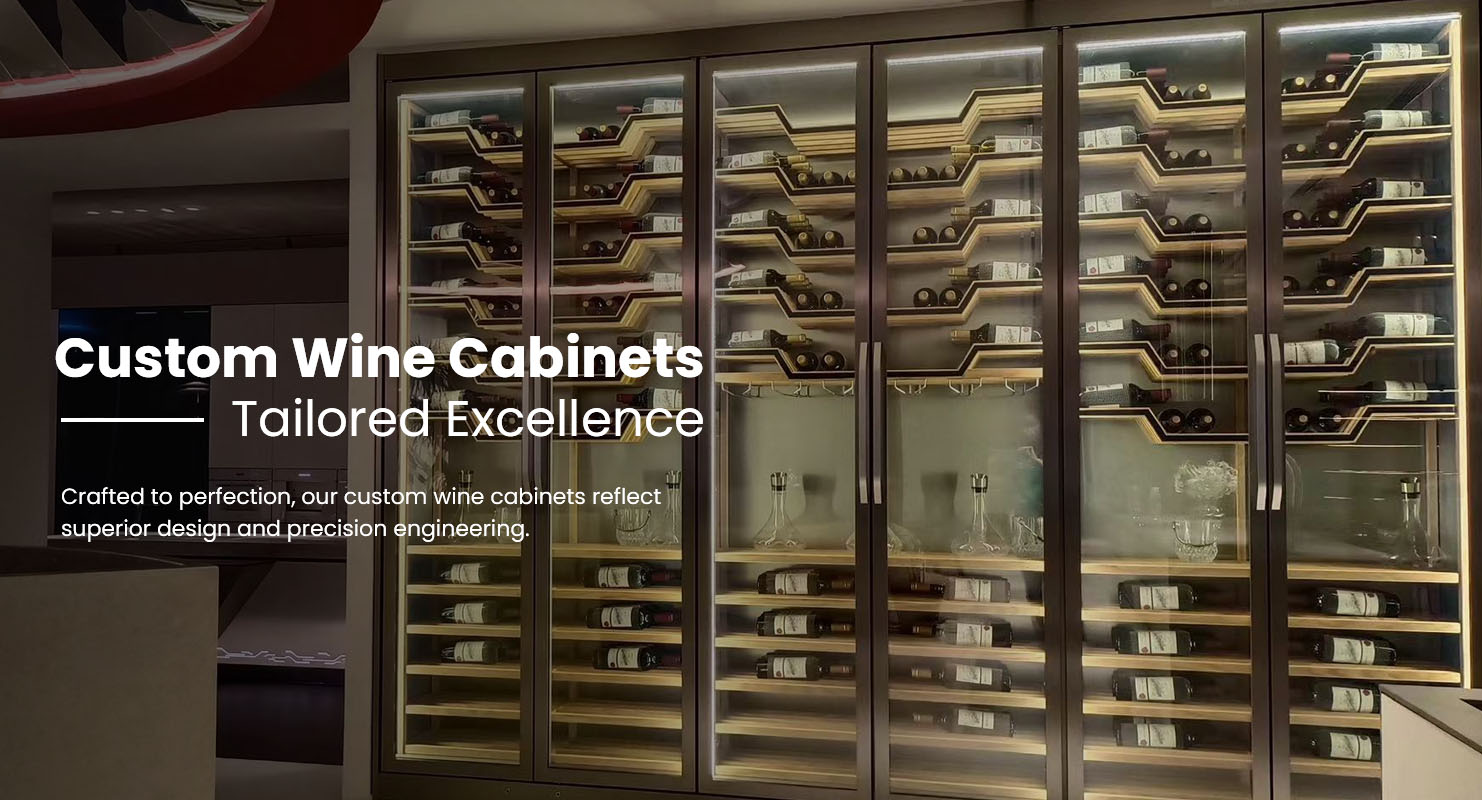
For modern wine storage projects, insulated glass doors are often selected because they balance appearance and temperature control.
Consider Insulation And Sealing Performance
The most important function of a wine cellar door is preventing unwanted heat exchange.
Key design factors include:
Door Frame Structure
A strong frame helps maintain:
Structural stability
Long-term durability
Accurate closing performance
Sealing System
High-quality sealing reduces:
Cold air leakage
Energy consumption
Temperature fluctuations
Glass Performance
For glass wine cellar doors, double-layer tempered glass improves insulation and safety.
WINTON applies insulated cabinet structures, double-layer glass solutions, and temperature control technologies in wine storage products to improve stability and energy efficiency. (WENTENG)
Select Suitable Materials For Wine Cellar Doors
Material selection affects both appearance and performance.
| Material | Advantages |
|---|---|
| Stainless steel | Durable and corrosion resistant |
| Tempered glass | Safe and visually attractive |
| Aluminum frame | Lightweight and stable |
| Insulation materials | Improve thermal performance |
For luxury wine cellars, materials should match the interior style while maintaining functional performance.
A professional manufacturer evaluates:
Environmental conditions
Door size
Usage frequency
Design requirements
Installation method
Match The Door Design With The Wine Cellar Layout
A wine cellar door should be planned together with the entire storage system.
Important considerations include:
| Consideration | Purpose |
|---|---|
| Door position | Improve access efficiency |
| Opening direction | Match room layout |
| Size specification | Fit installation space |
| Appearance style | Match interior design |
For example, a hotel wine room may require a larger display door, while a private home wine cellar may prioritize compact design and insulation.
WINTON provides custom wine cabinets and wine cellar solutions that can be developed according to different project layouts, designs, and storage requirements. (WENTENG)
Manufacturing Process Behind Reliable Wine Storage Products
A professional wine storage manufacturer controls quality from design to final production.
The manufacturing process includes:
Product design
Structural engineering
Material preparation
Frame processing
Glass installation
Insulation assembly
Cooling system integration
Performance testing
Final inspection
Important quality checkpoints include:
| Quality Control | Purpose |
|---|---|
| Material inspection | Confirm durability |
| Dimension testing | Ensure installation accuracy |
| Sealing testing | Reduce air leakage |
| Temperature testing | Verify stability |
| Appearance inspection | Maintain quality |
WINTON’s production capabilities include shearing, bending, grooving, foaming, welding, and testing equipment to support professional wine cabinet manufacturing. (WENTENG)
OEM And ODM Wine Cellar Door Development
Different projects may require different door dimensions, materials, finishes, and structures.
A professional OEM and ODM process includes:
Project Requirement Analysis
Manufacturers evaluate:
Wine room size
Door dimensions
Interior design style
Material preferences
Performance requirements
Prototype Development
Testing focuses on:
Structural strength
Sealing performance
Appearance quality
Installation compatibility
Bulk Production
Manufacturing control includes:
Component consistency
Production accuracy
Quality inspection
Packaging protection
For customized wine storage projects, working with a manufacturer allows better control over design details and production standards.
Manufacturer vs Trader: Why Production Capability Matters
Choosing a manufacturer instead of a trader provides more control over product development.
A manufacturer can support:
Custom design
Material selection
Engineering improvements
Quality inspection
Production management
A trader mainly supplies existing products, while a manufacturer can adjust structures and specifications based on project requirements.
WINTON focuses on research, development, production, and sales of wine cabinets and Cigar Cabinets, providing customized wine storage solutions for different applications. (WENTENG)
Bulk Supply And Project Sourcing Checklist
For hotels, restaurants, wine retailers, and large residential projects, planning before bulk orders is essential.
Confirm:
| Requirement | Purpose |
|---|---|
| Door dimensions | Ensure installation compatibility |
| Material standards | Improve durability |
| Glass specification | Balance safety and insulation |
| Finish requirements | Match design style |
| Packaging method | Reduce transportation damage |
| Delivery schedule | Support project completion |
A complete sourcing checklist includes:
Wine cellar design
Door structure
Installation environment
Material selection
Performance requirements
Export standards
Quality inspection process