
How To Build Wine Cellar In Basement
Building a wine cellar in a basement is one of the most practical ways to create a professional wine storage environment at home. Basements naturally provide advantages such as reduced sunlight exposure and more stable temperatures compared with above-ground rooms. However, converting a basement into a reliable wine cellar requires proper insulation, moisture protection, cooling technology, and storage planning.
A successful basement wine cellar is not simply a cold room with wine racks. It is a controlled environment designed to maintain stable temperature and humidity for long-term wine preservation. Professional wine storage recommendations generally target around 12°C to 15°C temperature with approximately 50% to 70% relative humidity. (Cachet Wine Cellars)
WINTON specializes in Wine Cooler and Custom Wine Cabinet manufacturing, providing customized wine storage solutions for residential, hospitality, and commercial projects.
Evaluate Your Basement Before Building A Wine Cellar
The basement location is usually a good starting point, but every space has different conditions.
Before construction, check:
| Inspection Item | Purpose |
|---|---|
| Basement temperature | Determine cooling requirements |
| Humidity level | Prevent mold and moisture damage |
| Wall condition | Check insulation needs |
| Floor condition | Ensure moisture protection |
| Electrical supply | Support cooling equipment |
A basement wine cellar should avoid:
Direct sunlight
Frequent temperature changes
Water leakage
Strong vibration
Poor ventilation
Although basements are naturally cooler, most modern basements still require active temperature control because household environments are usually warmer and less stable than traditional underground cellars. (Squarespace)
Build Proper Insulation And Moisture Protection
Insulation is one of the most important parts of a basement wine cellar.
Without proper insulation, the cooling system may run continuously and struggle to maintain stable conditions.
A professional basement wine cellar should include:
| Component | Function |
|---|---|
| Insulated walls | Reduce heat transfer |
| Ceiling insulation | Improve efficiency |
| Vapor barrier | Control moisture movement |
| Sealed door | Prevent air leakage |
| Waterproof treatment | Protect structure |
Basement environments often have higher humidity levels, which can be helpful for wine storage but may also create mold risks if moisture is uncontrolled. Maintaining suitable humidity helps protect corks while avoiding damage to labels and wooden components. (Wine Cellar Authority)
WINTON applies insulation structures and professional cabinet engineering to improve thermal stability and storage performance in wine storage equipment.
Maintain Temperature And Humidity Control
Temperature stability is the core requirement of any basement wine cellar.
Recommended storage conditions:
| Factor | Ideal Range |
|---|---|
| Temperature | 12°C to 15°C |
| Humidity | 50% to 70% |
| Lighting | Low UV exposure |
| Vibration | Minimal |
The goal is not only reaching the correct temperature but maintaining consistency. Large temperature fluctuations can accelerate wine aging and affect bottle sealing performance. (The Washington Post)
A basement wine cellar usually requires:
Dedicated cooling system
Air circulation design
Humidity monitoring
Temperature adjustment
WINTON wine storage solutions integrate cooling systems designed for stable temperature control, helping maintain suitable conditions for different wine collections.
Choose Between Wine Room And Wine Cabinet
A basement wine cellar can be designed in different ways depending on available space and collection size.
Basement Wine Room
A dedicated wine room provides:
Large storage capacity
Walk-in experience
Flexible interior design
Custom rack layout
Suitable for:
Luxury homes
Wine collectors
Restaurants
Hospitality projects
Basement Wine Cabinet
A custom wine cabinet is easier to install and manage.
Advantages include:
Built-in cooling system
Compact structure
Flexible placement
Lower construction requirements
| Solution | Best Application |
|---|---|
| Small wine cabinet | Personal collection |
| Built-in wine cooler | Residential projects |
| Walk-in cellar | Large collections |
| commercial wine storage | Hotels and restaurants |
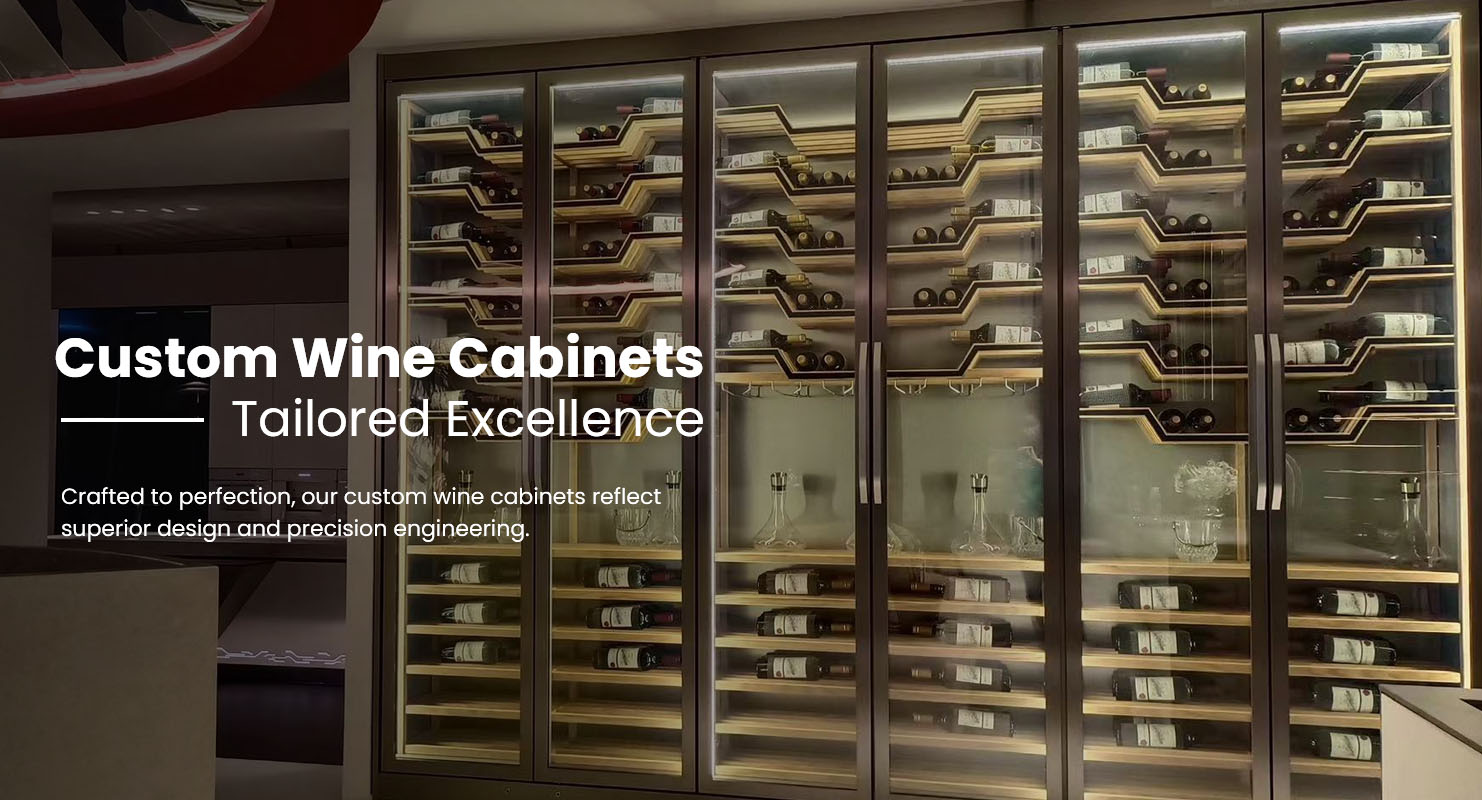
WINTON provides custom wine cabinets and built-in wine storage solutions designed according to different spaces and project requirements. (wintonwinecooler.com)
Design Efficient Wine Storage Layout
A basement wine cellar should maximize available space while keeping bottles easy to manage.
Recommended layout:
Bottle Storage Classification
Organize wine by:
Red wine
White wine
Sparkling wine
Vintage collections
Storage Zones
| Area | Purpose |
|---|---|
| Front shelves | Frequently accessed bottles |
| Main racks | Daily storage |
| Lower shelves | Long-term aging |
| Display area | Premium presentation |
Horizontal bottle storage remains a common method because it helps maintain cork conditions during long-term storage.
For customized basement projects, adjustable shelving allows future collection expansion.
Select Durable Materials For Basement Wine Cellar
Basement environments require materials that can handle humidity and long-term use.
Common materials include:
| Material | Application |
|---|---|
| Stainless steel | Structural components |
| Tempered glass | Display doors |
| Solid wood | Bottle shelves |
| Insulation materials | Temperature protection |
Materials should provide:
Moisture resistance
Structural durability
Long service life
Easy maintenance
WINTON uses stainless steel structures, glass components, insulation systems, and professional cooling technology to create reliable wine storage solutions.
Manufacturing Process Of Professional Wine Storage Equipment
Although a basement wine cellar looks simple after installation, professional wine storage products require precise manufacturing.
The production process includes:
Product design
Engineering evaluation
Material preparation
Structural processing
Cabinet assembly
Insulation foaming
Cooling system installation
Electrical testing
Temperature calibration
Final inspection
Quality control checkpoints include:
| Quality Check | Purpose |
|---|---|
| Material inspection | Confirm durability |
| Dimension testing | Ensure accuracy |
| Cooling testing | Verify performance |
| Electrical inspection | Improve safety |
| Appearance check | Maintain consistency |
WINTON controls production through professional processes including cutting, bending, welding, foaming, assembly, and testing.
OEM And ODM Basement Wine Cellar Solutions
Every basement has different dimensions, humidity conditions, and design requirements. OEM and ODM manufacturing allows wine storage solutions to be customized according to project needs.
The customization process includes:
Project Analysis
Manufacturers evaluate:
Basement size
Bottle capacity
Cooling requirements
Interior design
Material preferences
Product Development
Testing focuses on:
Temperature stability
Structural strength
Energy efficiency
Installation compatibility
Bulk Production
Production management includes:
Component consistency
Quality inspection
Packaging protection
Delivery control
WINTON provides customized wine cabinets and wine storage systems for different residential and commercial applications. (wintonwinecooler.com)
Manufacturer Vs Trader: Why Factory Capability Matters
For basement wine cellar projects, working directly with a manufacturer provides stronger control over customization and quality.
A manufacturer can provide:
Custom dimensions
Engineering support
Material selection
Cooling integration
Production management
Quality inspection
A trader usually supplies standard products, while a manufacturer can adjust designs according to specific project requirements.
WINTON focuses on wine cabinet research, development, production, and customized manufacturing, supporting projects from design to final production.
Basement Wine Cellar Project Checklist
Before starting construction, confirm:
| Requirement | Purpose |
|---|---|
| Basement conditions | Select suitable solution |
| Storage capacity | Plan future needs |
| Cooling system | Maintain stability |
| Insulation design | Improve efficiency |
| Material standards | Ensure durability |
| Installation requirements | Avoid future problems |
Important sourcing considerations include:
Temperature range
Humidity control
Cabinet structure
Cooling performance
Quality standards
Export compliance
Previous: